AEROSOL EUROPE: Mr. Tenés, first of all, congratulations on your election as President of the Spanish Aerosol Association AEDA. We wish you great success! What goals have you set yourself in the medium term?
Mauro Tenés: Thank you very much. It is a great honor to serve as President of AEDA and to represent such a dynamic and innovative industry.
My main objective is to strengthen AEDA's role as the leading platform for collaboration across the Spanish aerosol value chain. We want to reinforce the association's position as a trusted partner for industry, regulators, and society, while promoting innovation, sustainability, and technical excellence.
Over the coming years, we will focus on supporting our members in adapting to an evolving regulatory environment, encouraging the exchange of knowledge and best practices, and attracting new talent to our industry.
AEROSOL EUROPE: What is the present situation of the Spanish aerosol industry?
Mauro Tenés: The Spanish aerosol industry is in good health. It has demonstrated remarkable resilience in recent years despite facing significant challenges, including rising energy costs, supply chain disruptions, and increasing regulatory requirements.
Spain has a strong manufacturing base, with companies recognized for their flexibility and quality standards. Our industry continues to invest in new technologies, sustainable packaging solutions, and more efficient production processes.
While economic uncertainty remains, the sector has shown its ability to adapt quickly. It continues to offer significant value to customers across personal care, household, food, industrial, automotive, and pharmaceutical applications.
AEROSOL EUROPE: The EU Packaging and Packaging Waste Regulation (PPWR) is the new EU framework that will replace the current Packaging Directive and establish one harmonized set of rules for all packaging in the European Union. What consequences do you foresee for the Spanish aerosol market?
Mauro Tenés: The PPWR represents one of the most significant regulatory developments for our industry in recent years. Although it presents important challenges, it also creates an opportunity to demonstrate that aerosol packaging is already a highly efficient and recyclable format.
Our priority is to ensure that the implementation of the regulation is based on sound scientific evidence and lifecycle analysis. Aerosols should be assessed according to their real environmental performance rather than through simplified assumptions.
Spanish manufacturers are already investing in lightweight packaging, increased recycled content, improved recyclability, and lower carbon emissions. The new regulatory framework should encourage innovation while preserving the competitiveness of European manufacturing.
AEROSOL EUROPE: What is the main issue that needs to be discussed urgently within the Spanish aerosol industry?
Mauro Tenés: Perhaps the most urgent challenge is maintaining the competitiveness of our industry while responding to an increasingly demanding regulatory environment.
Companies are fully committed to sustainability, but they also require regulatory certainty and realistic implementation timelines to continue investing and innovating. We must avoid creating unnecessary administrative burdens that could reduce the competitiveness of European manufacturers as compared to producers outside the EU.
At the same time, our industry must continue communicating the many advantages of aerosol technology, particularly regarding safety, product performance, efficient use of materials, and recyclability.
AEROSOL EUROPE: Are there any special trends concerning aerosols in the Spanish industry?
Mauro Tenés: Several trends are shaping the Spanish aerosol market. Sustainability remains the strongest driver, leading to increased use of recycled materials, improved packaging design, and the development of products with lower environmental impact.
We also see growing demand for premium personal care products, more specialized technical aerosols, and innovative formulations that improve performance while reducing the environmental footprint.
Digitalization, automation, and process optimization are also becoming increasingly important as companies seek greater efficiency, traceability, and production flexibility.
AEROSOL EUROPE: How high do you estimate the growth potential to be on the Spanish aerosol market in the medium term?
Mauro Tenés: Growth will likely be moderate, but it will be supported by continuous innovation, increasing demand for high-value products and the strong export orientation of many Spanish manufacturers.
Success will depend on maintaining competitiveness, investing in sustainable technologies, and ensuring that European regulation supports innovation rather than limiting it.
AEROSOL EUROPE: Can you give our readers current production figures?
Mauro Tenés: Spain continues to be one of Europe's leading aerosol producers. According to the latest available data from AEDA, annual production stands at around 340 million aerosol units.
Beyond the production figures themselves, what is particularly encouraging is the industry's continued investment in manufacturing capacity, product innovation, and sustainable technologies.
AEROSOL EUROPE: Where do you see aerosol products in the near future?
Mauro Tenés: I see a very positive future for aerosol products. Consumers increasingly value convenience, safety, hygiene, and precise product application—all areas where aerosols offer clear advantages. At the same time, the industry is making significant progress in reducing its environmental footprint through innovation in packaging materials, propellants, and manufacturing processes.
I am confident that our industry will continue demonstrating its capacity to innovate while delivering safe, effective and environmentally responsible solutions to consumers worldwide.
AEROSOL EUROPE: Please briefly introduce your company to our readers!
Ben Chen: First and foremost, it feels both special and familiar to be interviewed by AEROSOL EUROPE, a publication with a long history. To have maintained a connection over two decades and to be invited to share our views today is a sign of trust and recognition that we sincerely appreciate.
Chengtian was founded in 1988. For over three decades, our core purpose has been clear: to be a reliable manufacturer of sealing components for aerosol valves, with a focus on the outer gaskets.
Thanks to the long-term support of our global clients, we have grown into a world-leading supplier in this field. Our role as a key supplier to a significant portion of the market comes with a profound understanding: ensuring the stability of our supply is not just an operational goal but a fundamental responsibility to the industry we serve.
This awareness defines our mission and drives us forward. Therefore, our goal is to be the most trusted “Sealing Solution Partner” for the industry, powered by our unwavering commitment to stable supply and consistent quality.
AEROSOL EUROPE: What challenges do you currently see in the aerosol industry in your country?
Ben Chen: We see a central challenge that transcends geography: how can suppliers deliver real value and security in an era of volatility? For our clients, it’s no longer just about purchasing a component but securing a partnership that delivers a high-value product of certainty.
This means a commitment that guarantees:
- Competitive total cost
- Payment term flexibility
- Guaranteed consistency
- Geographic supply diversification
- Agile support for new projects
Delivering this integrated bundle of benefits is our strategic response. We are evolving from a component supplier into a partner our clients can rely on to systematically deliverthis certainty, turning supply chain resilience into a tangible competitive advantage for their business.
AEROSOL EUROPE: Chengtian operates internationally. Which markets do you currently consider to be significant?
Ben Chen: Indeed, each market has its unique characteristics. We serve our global clients by building a dynamic portfolio around the world's two primary aerosol ecosystems.
The European and North American markets are the gathering places and innovation sources for the world's premium aerosol brands. Clients here demand the highest levels of product precision, environmental standards, and consistency. Serving these top-tier clients is key to establishing our technological benchmark and driving our commitment to excellence.
The Asian market, particularly China, is the world's most dynamic growth engine. It is the global powerhouse for fast-moving consumer goods (FMCG) manufacturing. This immense ecosystem provides the agility, scale, and rapid customization capabilities essential to succeeding in today's aerosol segment. Our integrated manufacturing base here is strategically positioned to provide the most responsive and competitive support for our core clients.
Therefore, Chengtian's global operation is not about simply dividing markets. Instead, it revolves around the core needs of these primary ecosystems and beyond. We are constructing a responsive global support network by combining our manufacturing strength in Asia with our strategic warehouse in Germany and our planned production base in Thailand. This expanding network allows us to provide diversified, reliable, and localized support to clients not only in these core regions but also in emerging markets worldwide.
AEROSOL EUROPE: Where do you see your core market at the moment?
Ben Chen: Geographically, our business is concentrated in two well-established and continuously expanding regions: Asia and Europe. But strategically, our core is defined by more than location.
First, Asia is the foundation and bedrock of our development. Benefiting from geographic and cultural proximity, we have established deep, solid cooperative relationships with numerous Asian clients. They are not only the strong pillar of our performance but also our most important partners for gaining insights into local needs and driving agile innovation.
Meanwhile, Europe represents our highly mature strategic market. Over two decades of collaboration, we have fostered trusted partnerships with most major clients there. These relationships go beyond ordinary buyer-seller dynamics. Their globally leading high standards continuously drive us to scale new heights in technology, quality, and service.
Therefore, to us, “core markets” are not defined merely by revenue but by the depth of these symbiotic relationships. In Asia, we grow together with the market’s dynamism. In Europe, we refine our excellence through partnership. This mutual reinforcement is what makes these markets irreplaceably core, and it’s the model we seek to build wherever we operate.
AEROSOL EUROPE: What innovations have you recently launched on the market?
Ben Chen: We have strategically expanded our core sealing portfolio by formally launching production of two key components: inner gaskets for aerosol valves and gaskets for pumps.
While these are established products in the market, their successful production launch marks a significant capability milestone for Chengtian. It validates that we have mastered the specific material formulations, specialized manufacturing processes, and elevated precision engineering standards these more demanding applications require. This move not only broadens our position within the aerosol ecosystem but also demonstrates our ability to meet the higher performance thresholds our clients expect for their most critical products. Feedback since production began in 2024 has been very positive, reinforcing the quality, consistency, and reliability of these new offerings.
Systematic enhancements across three key areas underpin this strategic expansion:
Organizational focus: We established a dedicated R&D Department to ensure market needs are accurately translated into technical specifications and efficient production processes.
Manufacturing excellence: We commissioned a new, highly automated rubber compounding plant. This investment represents a digital transformation of our core production process, delivering greater efficiency, cost-effectiveness, and a leap in product consistency and batch-to-batch stability.
Technical collaboration: Our ongoing industry-academia partnership with South China University of Technology has strengthened our formulation development capabilities and talent reserves, providing sustained support for our innovation pipeline.
AEROSOL EUROPE: Which topics are currently being prioritized in your company?
Ben Chen: Following the successful launch of our inner gaskets for aerosol valves and gaskets for pumps, our immediate priority is scaling and solidifying this new segment of our business. We are focused on translating initial market acceptance into a lasting partnership. This involves three concerted efforts:
Deep engagement with key manufacturers: We are prioritizing close collaboration with both valve and pump manufacturers. This goes beyond introductions; it means providing comprehensive technical data and support to prove our reliability and foster successful integration.
Scalable and consistent production: We are ensuring our dedicated production lines for these new products operate to the same proven standards of consistency and reliability as our established outer gaskets, even as order volumes increase.
Ensuring in-use reliability: We are placing the utmost importance on closely following the performance of these gaskets in the field. This proactive follow-up allows us to ensure they deliver reliable performance and to address any questions quickly and precisely.
In short, our focus is on nurturing this new growth engine—ensuring it delivers exceptional value and becomes a robust, sustainable pillar of our portfolio.
AEROSOL EUROPE: What are your medium-term objectives?
Ben Chen: Our medium-term objectives are driven by a commitment to ‘technology’, as embedded in our new corporate identity. We aim to build industry-leading global innovation and delivery capabilities, ultimately solidifying our role as the most trusted strategic partner for our international clients.
To this end, we are making a core strategic investment: the construction of a new group headquarters and R&D manufacturing base in Guangdong province in Southern China—Chengtian (Guangdong) Technology Co., Ltd. The project covers a total area of 60,000 square meters, including a landmark headquarters building and two high-standard factory buildings, scheduled for completion by the end of 2027.
This is a systematic reconfiguration of our capabilities:
To become a global innovation engine: The headquarters will house a cutting-edge industry lab center, integrating materials science, precision engineering, and intelligent technology to focus on the R&D of advanced sealing solutions for more demanding and sustainable applications.
To strengthen our global production and supply network, the new factories will be equipped with highly automated production lines and incorporate cleanroom environments rated for critical processes, such as those required for food-grade and medical applications. They will synergize with our existing production bases in China, our warehouse in Germany, and our planned base in Thailand to form a more responsive and stable global manufacturing and service network.
AEROSOL EUROPE: You will be exhibiting at Paris Packaging Week in February. What are your expectations?
Ben Chen: Paris Packaging Week is one of the industry's most important global events, and its influence continues to grow. We approach it with eager anticipation and see it as a valuable opportunity to connect.
The vast majority of the world's aerosol valve manufacturers are our clients, and Paris serves as the central annual gathering place to meet these vital partners. We look forward to achieving in-depth communication at three levels:
First, “Reporting and Showcasing”: To personally update clients on Chengtian’s key developments over the past year, particularly our significant investments in new facilities and advanced production equipment.
Second, “Listening and Improving”: To sincerely listen to client feedback and suggestions regarding product performance, supply assurance, service quality, and all other aspects. This firsthand information will be crucial for driving our continuous improvement.
Finally, and most importantly, “Alignment and Synergy”: To gain a deep understanding of clients' future market strategies and product plans, and to jointly explore how Chengtian can more closely align with their goals and how this alignment can make Chengtian a more reliable and forward-looking partner within their supply chain.
For us, the Paris trip is a precious opportunity to synchronize with the global industry pulse and deepen strategic mutual trust.


AEROSOL EUROPE: Mr. Heskins, what is the current state of the British aerosol industry?
Patrick Heskins: The UK is the largest producer of aerosols in Europe, and they remain a strong export product. In 2024, nearly 70% of the products made in the UK were exported to the EU and further afield. While we operate in a mature market, production remains steady and resilient to ongoing economic and geopolitical shifts. Both UK and global consumers consistently choose aerosols as a product they can trust for convenience, efficacy, and hygiene.
AEROSOL EUROPE: Of which successes in the past year are you especially proud?
Patrick Heskins: Advocating for the best interests of our members, we are encouraged by the firm relationships we have forged with regulators and legislators such as the Office for Product Safety Standards (OPSS) and Department of Business and Trade (DBT). Their input into our member events has been highly beneficial in supporting industry through all avenues of complex legislative developments. Equally, we hope that we have been able to provide a more nuanced understanding of our industry to our regulatory partners.
AEROSOL EUROPE: You recently held your Innovation Day. Could you briefly outline for our readers the key topics that were covered during the event?
Patrick Heskins: Patrick Heskins: An important aim of the Innovation Day is to reflect the breadth of the aerosol supply chain and to bring in insights and ideas from other industries. We look to ensure everyone gains something valuable from the event, so we were pleased to present a rich blend of speaker topics this year. The value of inclusive leadership teams, new ways to engage employees, and labour as a driver to improve factory performance were just some of the discussions. More sustainable cover caps, the use of BioLPG and digital printing technologies for aluminium and tinplate also featured. Business school students from Leeds Beckett University made for an interesting new segment this year, presenting their unique take on aerosol innovation and the supply chain. The student’s perspective sparked a lot of conversations and reinforced the idea that innovation of any kind doesn’t happen in a vacuum.
AEROSOL EUROPE: The recently released production figures for the British aerosol market have remained relatively stable. Where do you see additional growth potential in the near future?
Patrick Heskins: With shaving preparations showing year-on-year growth in both 2024 (11.5%) and 2025 (10%), it’s possible there’s room for further expansion. Beard fashion became a long-term trend, and the clean-shaven look could well follow a similar trajectory. That said, I should add that another contributing factor is that a major brand owner made a significant change to their packaging design in the last few years.
Although there was a small dip in the filling of deodorants and antiperspirants, (5% and 1.5%, respectively) there is potential for growth here too, with consumers moving away from body sprays. In household, we saw a small rise in air freshener volumes which does not necessarily point to growth potential, but it is in contrast to previous years where we have seen a decline as consumers opt for alternative home fragrance options.
AEROSOL EUROPE: Harmonization and standardization is always an issue. In brief how is the situation in the UK right now?
Patrick Heskins: We are very much in a “wait and see” situation, as the UK Government decides on which direction they will take. The relationship between the UK and the EU is very complicated. It is our largest export market, not just for aerosols but many other goods, but like the UK, there has been little growth in consumer markets over the last few years. The current government appears to be looking to build closer ties with the EU, with plans for dynamic alignment for many regulations. There are positives and negatives to this plan. The UK is, and always has been, a global trading nation. Alignment with the EU could impact on the potential for growth in exports to other nations, but it would secure our existing export markets. There is, of course, the complication of Northern Ireland and the Windsor Framework which is having a significant impact on the direction of UK regulations.
AEROSOL EUROPE: The EU Packaging and Packaging Waste Regulation (PPWR) is the new EU framework that will replace the current Packaging Directive and set one harmonized set of rules for all packaging in the European Union. What consequences do you foresee for the British aerosol market?
Patrick Heskins: In some respects, it is very simple, for those companies exporting to the EU, they will have to make sure that their products are compliant. In other respects, it potentially adds complication as there is always the possibility that the requirements that have to be met for the EU would make products non-complaint for the UK market. That said, UK regulations, such as Extended Producer Responsibility, are not dissimilar to the drivers behind PPWR, and we are a very inventive and dynamic industry, who I’m sure will be able to cope.
I think it’s also important to mention that about 50% of the aerosols consumed in the UK are imported, primarily, from EU companies. Those companies selling into the UK need to be aware that any divergence between EU and UK regulations could result in their products not being accepted on to the UK market. Alignment or acknowledgement of the equivalency of regulations needs to work both ways, not just for aerosol regulations, but also for the many sectoral regulations that are in place for the many different product types filled in to aerosol dispensers.
AEROSOL EUROPE: What topics in the British aerosol industry must be treated with priority in the near future?
Patrick Heskins: Sustainability, and in particular recycling, must be a priority for our industry in the short and medium term. Aerosol dispensers, for obvious safety reasons, are obliged to be single use. However, much of the regulation around packaging focuses on encouraging reuse and refill instead of recycling. This is an area we as an industry must think about very carefully, especially as here in the UK, and at some point in the future in all the EU members states, deposit return schemes, primarily for beverage containers, will be mandated. This may well impact the safety case for the collection of empty aerosols from household recycling.
I also think it is important to mention BAMA’s revised Aerosol Inhalation Caution Mark and statement. Following consumer research, ongoing discussions with academia and a report from UK charity, Re-Solv, a shift in language has been identified since the introduction of the Solvent Abuse Can Kill Instantly, or SACKI label in 1998. The new caution mark aims to address these changes and offer more detail on potential problems which can arise if the aerosol dispenser is not used in accordance with the manufacturer’s instructions.
AEROSOL EUROPE: What goals have you set for yourself for the next few years?
Patrick Heskins: I have been lucky enough to have had a career in the aerosol sector lasting nearly 40 years. What I hope, working with our member companies, and those involved in the aerosol industry across the world, is to make sure that the aerosol industry has at least another 40 years.
I suspect the sort of spray products that will be on the market in the next 5 to 10 years will be quite different to those we are producing today and our industry needs to be ready to embrace these challenges and changes.
AEROSOL EUROPE: Mr Heskins, we thank you for this conversation.
AEROSOL EUROPE: Please briefly introduce your company to our readers!
Stephanie Ren: In 1995, Hebei JINXING Aerosol Valve Manufacturing Co., Ltd. was founded by Mr. Yang Jinxing. For more than thirty years, we have been dedicated in producing high-quality aerosol valves. Today, JINXING has developed into a world-class aerosol valve manufacturer with nearly 300 employees, over 40 fully automated production lines, and an annual production capacity of 2 billion units of valves distributed to more than 80 countries and regions worldwide. Throughout the years, JINXNG's mission has remained unchanged: to continually strive to manufacture high-quality, safer, and more environmental friendly aerosol valves in an efficient and cost-effective way.
AEROSOL EUROPE: Where do you see your core market at the moment?
Stephanie Ren: In the Middle East, South America, Asia, North America and Europe.
AEROSOL EUROPE: JINXING VALVE is an internationally operating company. Where do you see growth markets?
Stephanie Ren: In Asia, Europe and South America.
AEROSOL EUROPE: What innovations have you recently launched on the market?
Stephanie Ren: We have recently launched a Butane gas stove valve, twist caps and different actuators.
AEROSOL EUROPE: What challenges do you currently see in the aerosol industry in your country?
Stephanie Ren: New technology and innovation!
AEROSOL EUROPE: Which topics are currently being prioritized in your company?
Stephanie Ren: To get more new items and, of course, more market shares.
AEROSOL EUROPE: What are your medium-term objectives?
Stephanie Ren: The medium-term goal is to make more environmental friendly products.
AEROSOL EUROPE: How do you assess the future development of aerosol products in general?
Stephanie Ren: With the improvement of people's pursuit of quality of life, the future of the aerosol products is promising.

Oliver Hoffmann: “The future of packaging steel is modern, digital, and sustainable”.
Companies face the challenge of producing more efficiently and with fewer resources. This is the only way for packaging manufacturers to meet increasingly stringent regulatory requirements and consumers’ growing environmental awareness. In this interview, Oliver Hoffmann, CTO of thyssenkrupp Rasselstein GmbH, Germany’s only tinplate producer, provides insights into the company’s comprehensive sustainability strategy. He explains how targeted innovations in packaging steel result in more sustainable and efficient products, the role of modern technologies and digital applications, and how the industry can prepare for upcoming regulatory changes.
Mr. Hoffmann, what sustainability vision guides thyssenkrupp Rasselstein, and what role do innovation and efficiency in production processes play in achieving them?
Oliver Hoffmann: Our sustainability vision is holistic. We ensure that the environment, our customers, our employees, and ultimately the end consumer benefit from our packaging steel through increasingly climate-friendly and efficient production, consistent focus on the circular economy, and the highest standards in occupational health and safety. To achieve this holistic sustainability goal, continuous modernization of our technologies and production processes is essential. Only then can we ensure steadily improving economic, environmental, and social performance for our customers and ourselves.
To this end, we consistently take a holistic view of packaging steel and related products such as food and aerosol cans. We use life cycle assessments (LCAs) to track the entire process, from the extraction of primary resources to the recycling of our packaging steel into new steel products.
Packaging manufacturers strive for efficiency gains. In which areas is thyssenkrupp Rasselstein focusing its innovations to achieve them?
Oliver Hoffmann: Efficiency gains can be achieved specifically by improving our tinplate products. With the development of rasselstein® Solidflex, we created an entirely new product family that enables the production of packaging steel using fewer resources without compromising performance. This technology allows us to make the material both stronger and more formable, enabling the manufacture of thinner and lighter food and aerosol cans. Using less material while maintaining stability represents a significant efficiency gain that conserves resources and reduces CO₂ emissions. Thus, we enable our customers to achieve notable reductions in their Scope 3 emissions.
Are there additional process-related developments currently under research?
Oliver Hoffmann: One particularly exciting EU-funded project in process innovation is Roll- Oil-free. We are investigating whether a long-term alternative to conventional rolling oil can be found. Ideally, the substance would also have a cleaning effect, which could simplify or even eliminate the need for subsequent degreasing, making it a highly promising approach in terms of sustainability.
In recent years, thyssenkrupp Rasselstein has increasingly embraced digital solutions. How are efficiency and digitalization connected?
Oliver Hoffmann: thyssenkrupp Rasselstein is progressively digitalizing its processes and developing proprietary applications. To accelerate this transformation, we established the Digital Solutions division about two years ago. This is where our experts create innovative IT solutions that support customers while making supply chains, products, and production processes more efficient and transparent. Time and again, we demonstrate that the future of packaging steel is modern, digital, and sustainable.
Thanks to digital tools, we can identify opportunities for resource savings and efficiency improvements even before a product is physically produced. Using the finite element analysis (FEA), can manufacturers are able to comprehensively test the feasibility of new geometries and material reductions in a virtual environment before practical application. FEA-supported development of new packaging steel grades enables precise gauge reductions, which not only save valuable resources but also reduce CO₂ emissions during transport. FEA also opens up a wide range of opportunities for product innovation in the packaging sector. Manufacturers can take bolder steps and explore more creative solutions. Throughout these processes, we provide guidance to our customers to jointly develop the best applications for sustainable, modern packaging. To make this process as streamlined and user-friendly as possible, we developed an intuitive application that allows customers, in collaboration with our Technical Customer Service team, to digitally model a can on a tablet and adjust material parameters with just a few clicks. This enables simulation of optimal geometry and material thickness in a short amount of time, tailored to the selected packaging steel grade.
Mr. Hoffmann, at the beginning you mentioned that thyssenkrupp Rasselstein's sustainability goals also include health protection. What does that involve?
Oliver Hoffmann: Health protection means keeping the well-being of our employees and the safety of consumers top of mind. We therefore proactively implement regulatory requirements in a timely manner. Major regulatory changes are on the horizon for product applications. For example, the use of BPA-containing internal and external coatings for tinplate food packaging has been banned in the EU since January 20, 2025. A transition period for internal coatings of most food tinplate packaging runs until July 20, 2026. For internal coatings of packaging for fruits, vegetables, and fish, as well as for external coatings, the transition period ends on January 20, 2028. This means food can manufacturers must act now to ensure a seamless transition. At thyssenkrupp Rasselstein, we know that a successful transition involves much more than replacing a lacquer. The entire packaging system must be perfectly coordinated. That’s why we work closely with lacquer manufacturers and our customers to ensure that consumers ultimately receive a flawless and tested product.
A key advantage for our customers: the chromium-free passivation rasselstein® CFPA is ideally suited for use with the new BPA-NI lacquers. It provides higher surface energy than chromium-containing passivations, resulting in improved wettability.
Regulatory requirements can also drive innovation. How can manufacturers respond to upcoming changes?
Oliver Hoffmann: The switch to BPA-NI lacquers should not be considered in isolation. Since chromium-containing passivations are also being restricted, it is advisable to address both issues at the same time. CFPA is a forward-looking solution that provides manufacturers with long-term planning security. It is also important to recognize that BPA is subject to increasing regulation not only in the EU but also in countries such as Canada, China, South Korea, several U.S. states (such as California), and parts of South America. Companies operating internationally should thus monitor global developments and not just EU requirements.
For the time being, we are pursuing a dual strategy. While we continue to offer conventional BPA-containing lacquers, we will soon rely exclusively on BPA-NI solutions for tinplate used in food packaging. To enhance energy efficiency, we commissioned a modern sheet-coating line earlier this year that is capable of lacquering up to 7,000 sheets per hour. At our coating unit, primers, top coats, and pigmented lacquers are applied in the desired thickness using a roller application process. Food packaging manufacturers who transition early to BPA-NI lacquers not only benefit from regulatory compliance but also strengthen their competitiveness by offering sustainable, future-proof packaging solutions. Now is the right time to act.
AEROSOL EUROPE: You recently held your major event, the IAE 2025. How did it go?
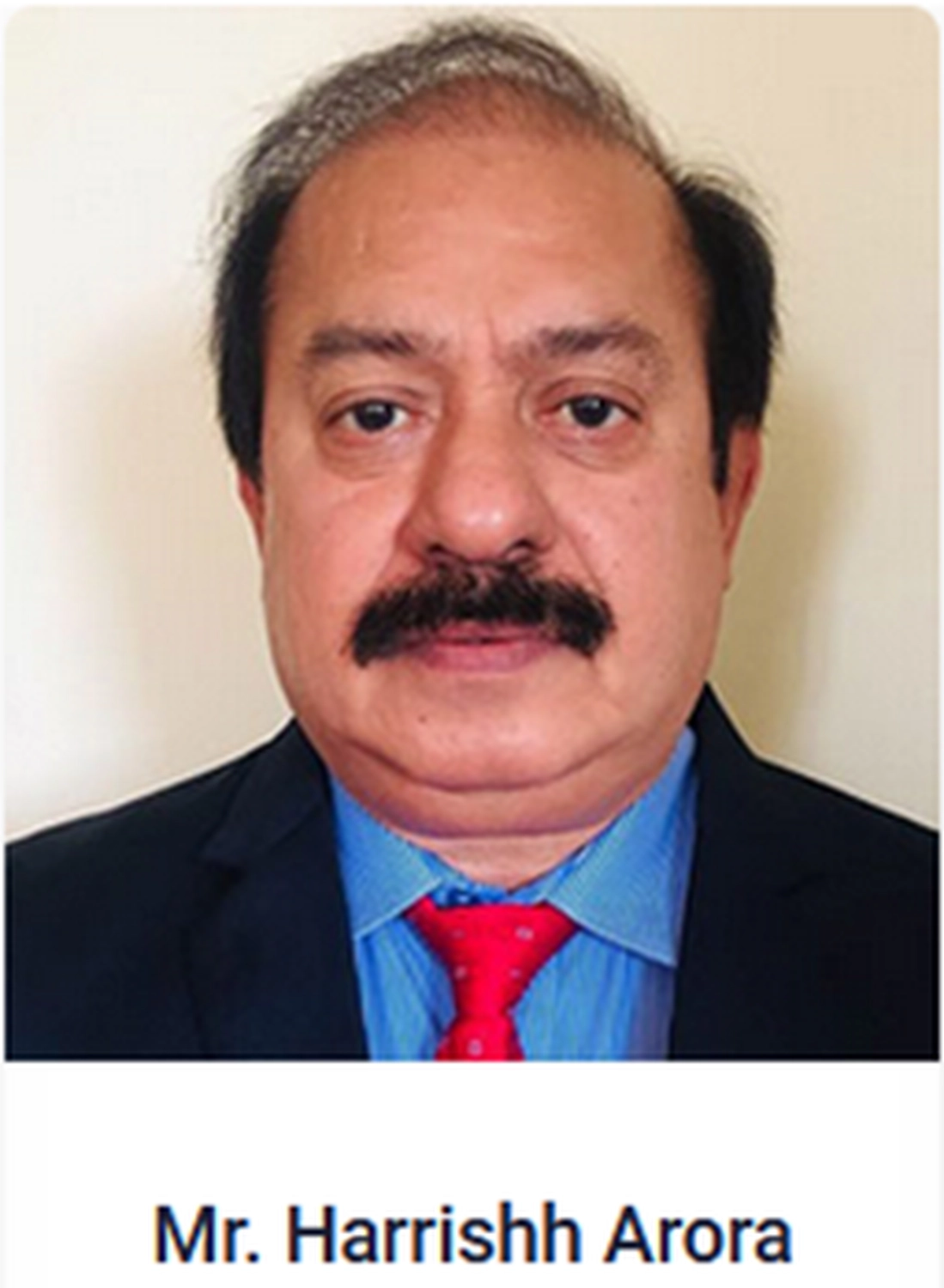
Harrishh Arora: This Trade Fair IAE2025 went very well.
AEROSOL EUROPE: What is the current state of the Indian aerosol industry?
Harrishh Arora: The Indian aerosol industry is looking up this year, as has been the trend since the onset of the pandemic, due to an increase in domestic demand and consumption. Consequently, many new aerosol plants are being set up.
AEROSOL EUROPE: Do you have any production figures?
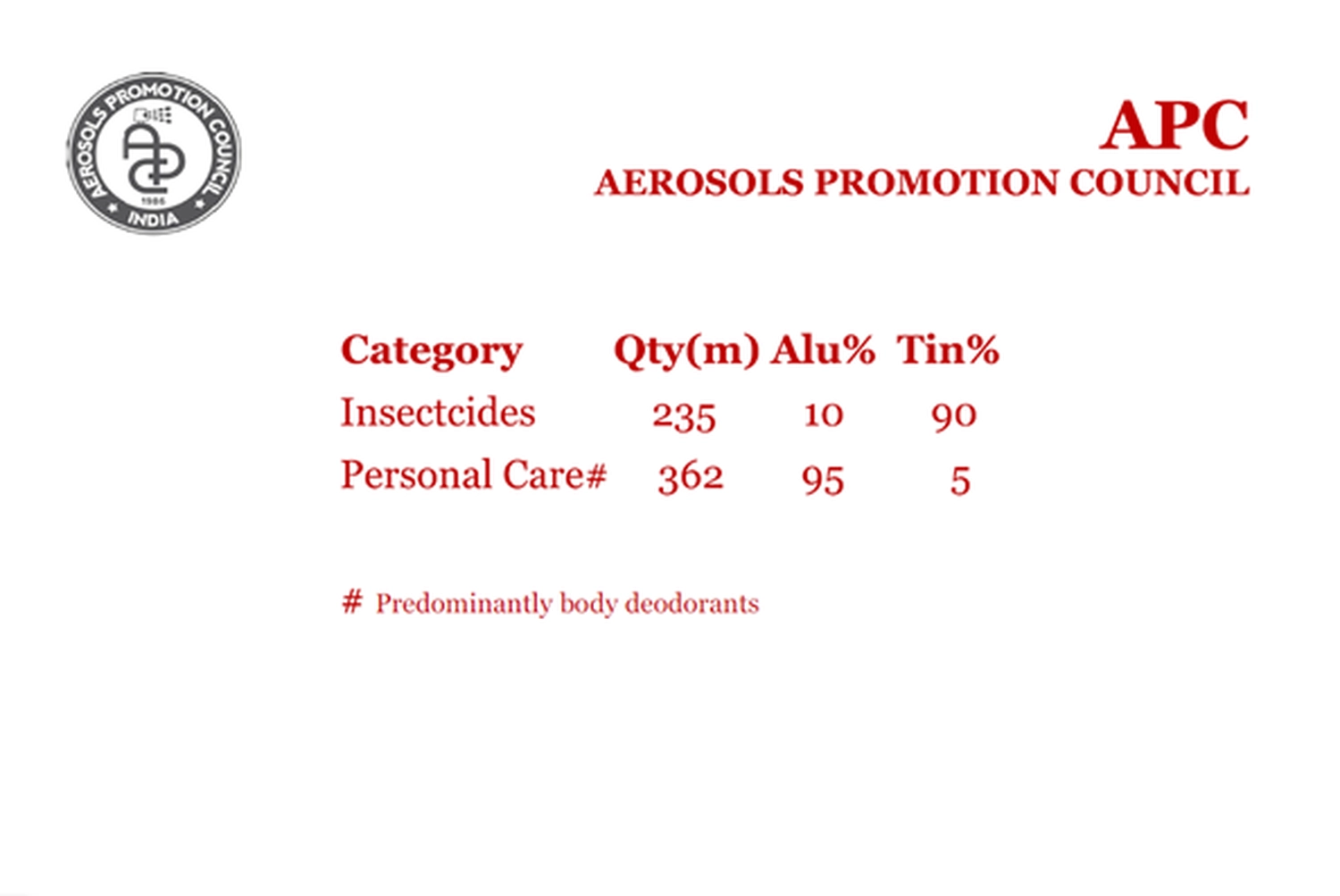
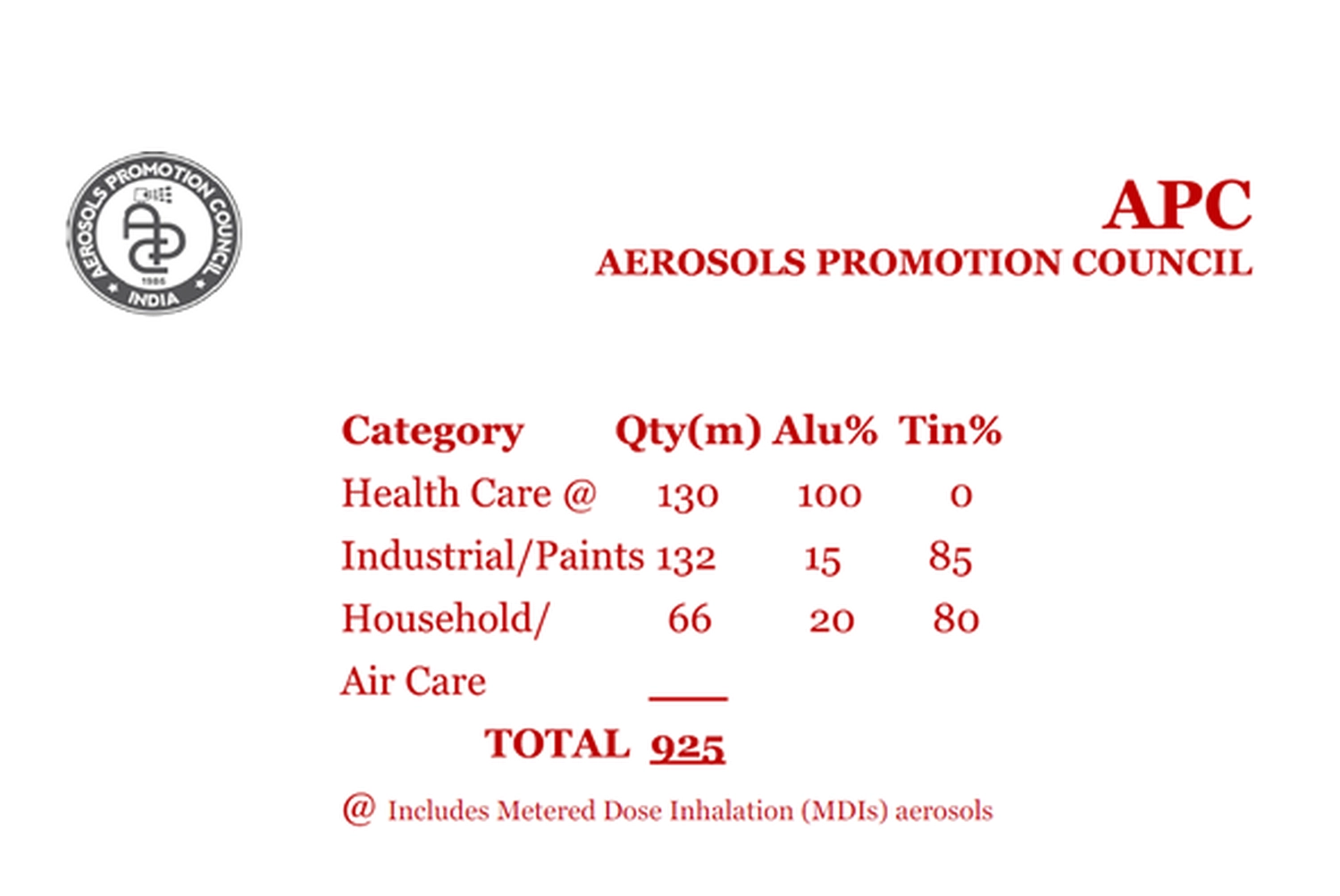
Harrishh Arora: The 2024 production figures are the following:
AEROSOL EUROPE: What topics should be prioritized in the industry right now?
Harrishh Arora: The aerosol industry's priorities are the availability of high-quality inputs at reasonable prices, improved safety systems, and a new regulatory environment for the aerosol sector.
AEROSOL EUROPE: Your association, the Aerosol Promotion Council, is part of the Asian Aerosol Federation (AAF). How should this cooperation be understood?
Harrishh Arora: Yes, the Aerosol Promotion Council (APC) is one of the founding members of the Asian Aerosol Federation (AAF), and the APC hosted the 2025 AAF meeting during IAE2025.
AEROSOL EUROPE: Is there any cooperation with the European Aerosol Association (FEA)?
Harrishh Arora: Yes, we have had good cooperation with FEA, as evidenced by their presence at our IAE2025 trade fair and at the AAF meeting. At APC, we are contemplating further formal cooperation with BAMA.
AEROSOL EUROPE: How does communication with your member companies work?
Harrishh Arora: Currently, we have limited communication with our member companies. We are setting up a regular channel to share information about aerosols with our members.
AEROSOL EUROPE: How many members does your association have, and when is your next congress?
Harrishh Arora: Currently, we have 109 members, many of whom are small or medium-sized enterprises.
Due to the large number of trade fairs taking place, aerosol companies are participating in many of them, which has resulted in a drop in foot traffic at these events. Therefore, we intend to plan our congress after a gap of around three years, possibly in 2028.
AEROSOL EUROPE: What challenges is the Indian aerosol industry currently facing?
Harrishh Arora: The Indian aerosol industry is facing cost escalations due to increased pricing of certain key inputs. At the same time, there is a shortage of qualified talent to help set up and run a successful aerosol operation.
Additionally, there is tough competition in the marketplace for aerosol products, as well as an increase in the number of contract manufacturers.
AEROSOL EUROPE: What is your outlook for the future of the aerosol product in general?
Harrishh Arora: As the production data shows, India is poised for further growth, mainly due to strong domestic demand and consumption. Indian aerosol companies are also now catering to global markets with high-quality products.
AEROSOL EUROPE: Mr. Arora, dear Harrishh, we thank you for this conversation.
Harrishh Arora: You are welcome, and we at the Aerosols Promotion Council (APC) thank you for providing us with this opportunity.
AEROSOL EUROPE: Your company is one of the leading manufacturers of aerosol cans in Europe. Can you please tell our readers roughly how G. Staehle GmbH u. Co. KG has developed in recent years?
Jörg Peter Staehle: We have grown in the last year. Of course, this is partly because we have invested. In the Corona era, for example, we completely revamped all of our semi-finished product lines. We installed new systems. Brought existing systems up to date. This way, we were able to expand our leading position in the semi-finished product sector and gain a competitive advantage. The situation is difficult at the moment, but when you make big investments, this means that you’re thinking about the future.
AEROSOL EUROPE: The economy is faltering. Is our industry feeling this as well?
Marc Oliver Staehle: Yes. Industrial activity is at a low point. The automotive, automobile, and mechanical engineering sectors are faltering, and of course we in the can world feel this too. We emerged from the pandemic stronger because we invested in equipment, efficiency improvements, modernization, optimization, and automation. In the last two years, therefore, we were able to generate more sales in Europe, but we are not yet where we were in the best years before the pandemic. Our goal is to manufacture more cans this year than last year.
AEROSOL EUROPE: You manufacture your cans of tinplate. Tinplate offers many advantages. One aspect is the complete recyclability of the material. What other advantages can you name that make this material attractive?
Marc Oliver Staehle: Tinplate is the best material for cans. Of course, there are various reasons for this: It’s essential to note here that we're talking about material that has an extremely high recycling rate. Tinplate is up to100% recyclable, and it can be recycled again and again. The raw material for tinplate is basically steel, and steel can easily be sorted out in a recycling process. Tinplate is also an ideal product with regard to sustainability. Tinplate aerosol cans are light and stable, and the material offers the additional advantage that you can achieve outstanding brilliance when printing cans, something that cannot be achieved with any other material.
AEROSOL EUROPE: In addition to developing and producing aerosol cans, you are increasingly making products that are specifically tailored to your customers’ needs. How do you have to conceive of processes and flows in this context?
Jörg Peter Staehle: Today, the aerosol can is a standardized product that must comply with standards and guidelines. Nevertheless, customers approach us with their requests for individual shapes and designs.
AEROSOL EUROPE: Where do you see your core markets?
Jörg Peter Staehle: Our markets are global, but our core markets today are in northwestern Europe. The reasons for this are efficiency, and first and foremost the distribution possibilities there. You might say that the sales markets arise geographically in a certain proximity to the production locations. For the future, of course, we see markets outside of Europe as potential target markets.
AEROSOL EUROPE: What, in your opinion, are interesting growth markets for aerosol cans, today and in the future?
Jörg Peter Staehle: We are growing in Poland and Czechia, and we are also growing in Romania and Bulgaria. And in Türkiye. But these are markets in which we, as a German manufacturer, have trouble competing.
AEROSOL EUROPE: The design of the can plays a big role. What are you doing to stay on top of current trends?
JörgPeter Staehle: On the one hand, the tinplate can is very stable; on the other hand, it is not easy to process due to the design and the haptics. You can “shape” the tinplate can; we have done that in the past. Nevertheless, the technical possibilities are not as good as for other materials.
AEROSOL EUROPE: And another word about sustainability: We know that sustainable engagement ranks high at your company. What are you doing to do justice to this claim?
Marc Oliver Staehle: Tinplate is a very sustainable material. Our production processes are also sustainable. We have state-of-the-art production facilities. We have reduced our energy consumption. Heat recovery is a big topic for us. We convert the process heat into heating for hot water, building heating, etc. This way, we significantly reduce ourCO2 emissions. We also generate our own electricity with solar power.
AEROSOL EUROPE: What challenges await our industry in the future?
Jörg Peter Staehle: One challenge will be that entire process chains are being outsourced abroad; on the other hand, consolidation processes will increase sharply. Nevertheless, we are well positioned because our production is extremely automated. We're also confident because we make a good product that is also sustainable.
AEROSOL EUROPE: How do you assess the future of aerosol packaging in general?
Jörg Peter Staehle: The aerosol can is a product with a promising future. In particular, tinplate cans are on the right track. It’s impossible to imagine the convenience sector without aerosol cans.
AEROSOL EUROPE: We thank you for the conversation.
AEROSOL EUROPE: Mr. Mohamed, you were recently named the new General Secretary of AEROBAL. Can you explain to our readers what your goals will be in your new job?
Seifeldin Raslan Mohamed: My primary goal as General Secretary is to maintain the high standards of my predecessor, Mr. Spengler, and at the same time to drive long-term growth and innovation in the industry. This means assisting our members with adjusting to new regulatory framework conditions such as the EU's packaging and packaging waste rules (PPWR) and encouraging the aluminum aerosol can as the environmentally responsible packaging choice. By encouraging cooperation with partners along the entire supply chain and increasing awareness of the industry's sustainability efforts, I would like to reinforce AEROBAL's role in designing a sustainable future for aluminum aerosols.
AEROSOL EUROPE: Production of aluminum aerosol cans developed very positively in the past year. Can you discuss figures?
Seifeldin Raslan Mohamed: Absolutely. In the first half of 2024, global deliveries by AEROBAL members increased by 4.4%, reaching more than 3.4 billion units. Deodorants and hair sprays led this growth, with demand increases of 7% and 8%, while the pharmaceutical sector grew by approximately 3%. This is a strong performance in various markets and demonstrates how attractive and resistant aluminum aerosol cans are.
AEROSOL EUROPE: What were the reasons for the continued increase?
Seifeldin Raslan Mohamed: The latest growth in demand for aluminum aerosol cans is driven primarily by changing consumer behavior in various regions. Even in areas with higher inflation, consumers prioritize essential body-care products, which are often regarded as affordable luxury goods. This change in consumer priorities still enables expenditures for everyday articles such as deodorants and hair sprays, despite less-than-ideal economic conditions. This constant demand for body care and pharmaceutical products, paired with a general resilience in consumer confidence, has contributed to the increase in aluminum aerosol can production around the world.
AEROSOL EUROPE: In which markets do you see great growth potential for aluminum cans?
Seifeldin Raslan Mohamed: Brazil has significant growth potential and can become an important filling center for the region. In contrast to other regions, which are experiencing economic declines, Brazil's production capacities and infrastructure are well-positioned for growth, especially since global instability has compromised production in other regions. The advantageous conditions for companies (a multitude of qualified workers and appropriate production costs as compared to other developed countries), as well as the more relaxed regulatory and sustainability-related requirements make Brazil an attractive location for brand owners, for setting up their filling centers there and then selling in other countries and regions.
AEROSOL EUROPE: How do you see the Asian markets? Where is the focal point here?
Seifeldin Raslan Mohamed: In Asia, the demand for aluminum aerosols is satisfactory; reports of a slight increase in the first half of 2024 in countries such as Thailand and Japan confirm this. The situation in China is worrisome, primarily due to the lasting crisis on the real estate market, which has had a negative effect on consumer behavior since many people have suffered significant financial losses. This has caused Chinese consumers to be more careful. In the future, it is unclear whether the demand in other large Asian economies such as India and Indonesia, which are currently experiencing stronger economic growth, will increase.
AEROSOL EUROPE: You represent the interests of international aluminum can manufacturers worldwide. How does communication with your member companies work? What channels do you use?
Seifeldin Raslan Mohamed: AEROBAL has two general members’ meetings a year, typically in January (combined with the Paris Packaging Week) and in September. The Secretariat presents complete details about the latest market, regulatory, and sustainability trends in the aluminum aerosol industry in various regions. These meetings are supplemented by regular digital newsletters to keep our members up-to-date, and we also conduct ad hoc video conferences as needed. We strive to maintain an open dialogue with our members in order to discuss ongoing developments and also upcoming challenges.
AEROSOL EUROPE: What makes aluminum so interesting as a material for the aerosol industry?
Seifeldin Raslan Mohamed: Aluminum is exceptionally attractive due to its endless recyclability without a loss of quality; this is crucial for sustainability. It is also extremely long-lasting, light, and it offers a strong barrier against external contamination, which makes it ideal for products that must guarantee safety and durability. Aluminum monobloc cans offer significant advantages with regard to decoration. Their smooth, seamless surface enables outstanding print quality and many design possibilities, including high-resolution graphics and lively colors. In addition, they can be processed easily with various printing technologies, something that helps brands distinguish themselves from the competition and present their products in an appealing manner. These aesthetic advantages help increase brand identity and awaken consumers’ interest.
AEROSOL EUROPE: What topics will be especially important for manufacturers of aluminum cans in the near future?
Seifeldin Raslan Mohamed: Sustainability and regulatory adaptation are crucial. Especially orientation according to rules such as the PPWR, the improvement of recyclability, and increasing of the share of recycled materials are the highest priorities. Cooperation with our partners along the supply chain is important for ensuring the production of a sustainable and conforming final product. In addition, it is important to remain in dialogue with legislative bodies and NGOs in order to guarantee a balanced regulatory environment. Through this engaged cooperation and exchange with various actors, we strive to do justice to the legal requirements and to effectively address environmental concerns.
AEROSOL EUROPE: Mr. Mohamed, we thank you for the conversation.
SRM: I thank you very much for the conversation and look forward to working with AEROSOL EUROPE.
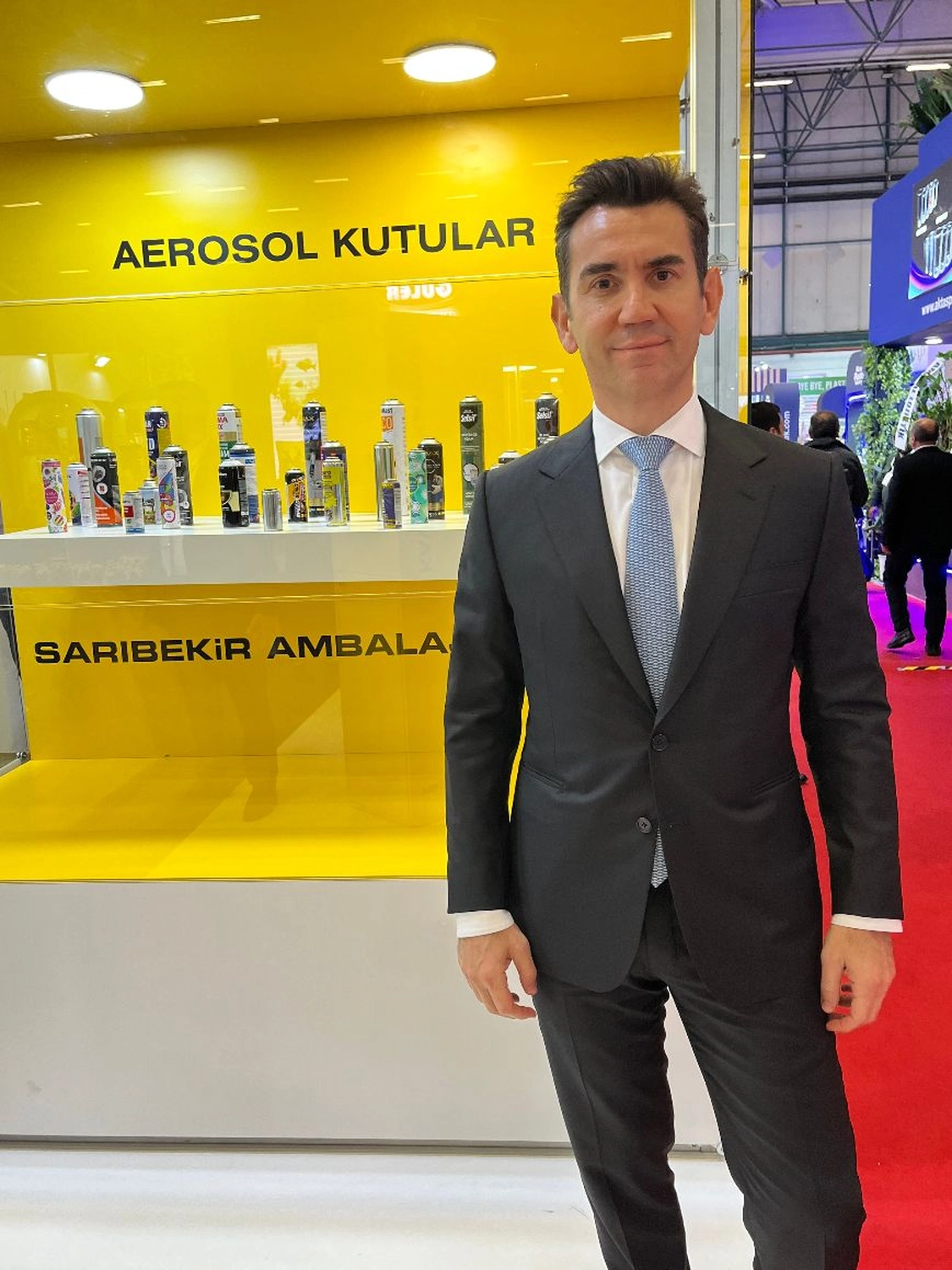
AEROSOL EUROPE: Your company is a leader in the international metal packaging industry and is involved in the manufacture of cans. Can you briefly outline the main areas of focus and give our readers a rough outline of how SARIBEKIR has developed in recent years?
Kaan Saribekir: Our family has reentered the metal packaging industry in the year 2005. Our focus was food packaging, and after completion of the factory in the Balıkesir Industrial Area in Türkiye, we started production of round open-top sanitary food cans and full aperture easy open ends in 2006. Twist-off closures for glass jars production followed in 2009 to fulfill the food canneries’ expectations. In 2018, we took made the decision to reenter the Aerosol business. Today our plant produces more than 1 Billion units of packaging material, it consumes 45,000 tons of tinplate per year; and employees about 650 people on average. We are exporting directly 1/3 of our products directly, and together with indirect exports, 2/3 of our production to around 40 countries worldwide.
AEROSOL EUROPE: In addition to the development and production of aerosol cans, you also manufacture a large number of customized products. How should we imagine your processes and procedures in this context?
Kaan Saribekir: We are operating in several buildings totaling 45,000 sq m on 85,000 sq m of land in one campus. We have separate production halls for each different production item. Production lines, quality protocol, standard operating protocol, and direct production staff are all different for every product we produce. For printing, we also have specialized equipment for different products. For aerosol printing we use a dedicated 8-color printing press with inline over varnish unit. For food cans we use 6- and 4-color printing presses, and for twist-off caps, we use a 2-color printing press.
AEROSOL EUROPE: Where do you see your core markets?
Kaan Saribekir: Our core markets are Europe, the Middle East, and North Africa.
AEROSOL EUROPE: In your opinion, what are the interesting growth markets for aerosol cans today and in the future?
Kaan Saribekir: European and developed market production figures are declining if you compare them with figures from 10 years ago. If you look at China and Brazil, the situation is completely different, and in total, global production is higher than it was 10 years ago. You can always find niche markets, products, and companies you can grow with. Among all the segments, personal care has the majority share and still holds the biggest potential for growth.
AEROSOL EUROPE: The design of the can plays a major role. What do you do to keep up with current trends?
Kaan Saribekir: Customer feedback is the main way we track industry trends. We have a strong sales team that makes frequent customer visits and takes part in important industry events. We are taking part in major industry exhibitions such as Interpack, Gulfood Manufacturing Dubai, ADF Paris, and Eurasia Packaging Istanbul as an exhibitor and SIAL Paris, Anuga Köln and Cosmoprof Bologna as a visitor.
Design of the can is very important for differentiating a company’s brand and product from its competitors. We have invested in the latest printing technology, a 2024 8-color Metalstar4 with inline overvarnish, in order to fulfill our customers’ expectations for the most demanding designs.
AEROSOL EUROPE: What innovations have there been at SARIBEKIR in recent years?
Kaan Saribekir: In last 5 years, we have started UV printing and UV varnishing. We have discovered that this was a necessary innovation for the aerosol printing quality. We added the production of 45 dia aerosol cans to dia 52 and 65, and we will be producing 57 dia aerosol cans by the end of this year. We can do powder stripe for the internal and colored side stripe for the external welding seam of the cans. Our recent 8c printing press with inline varnishing unit is full of innovative features in terms of quick changeovers and inline quality control. Small printing job sizes is a reality in the industry, and we are well equipped and have innovative solutions for that type of requirements.
AEROSOL EUROPE: How important is quality management in your company?
Kaan Saribekir: The management of our company places great importance on quality management systems. The necessary funds and policies are created for the implementation of the quality management systems by a highly professional team in our factory. We do have BRC packaging, TS EN ISO 9001;2015 quality management, ISO 45001 work health and safety management, and ISO 50001 energy management certificates.
AEROSOL EUROPE: One more word on sustainability: we know that your company places great importance on sustainability. What are you doing to live up to this claim?
Kaan Saribekir: Sustainability is a responsibility of current generations to future generations. We are trying to decrease our Co2 emissions by using cleaner energy. We have installed a 1 Mw solar panel system on the roof of our factory. We are discussing with the authorities to increase this by 3Mws. We are converting curing ovens from natural gas to full electric where we can. We do have a constant program for down gauging the tinplate thickness used in our cans. Also, we are looking for opportunities to build satellite plants in the EU to reduce Co2 emissions resulting from transportation.
AEROSOL EUROPE: What challenges will our industry face in the future?
Kaan Saribekir: Sustainability is a big challenge. I think rules and regulations for reducing the carbon footprint for the manufacturers will get tougher.
AEROSOL EUROPE: How do you see the future of aerosol packaging in general?
Kaan Saribekir: We regard it as bright. More people will need more aerosols and aerosol cans.
AEROSOL EUROPE: Mr. Saribekir, we thank you for this conversation.
AEROSOL EUROPE: Can you give our readers a brief outline of the current situation in the South African aerosol industry?
Chris Waldron: The South African Aerosol Industry is alive & well, in spite of difficult economic and political times in our country at present. Although we are not seeing much positive growth for the reasons mentioned above, the industry is holding its own and is not declining either.
AEROSOL EUROPE: Can you give us production figures?
Chris Waldron: Unfortunately, this is a mute point. Based on my above comment about growth, I would say the country’s aerosol figures amount to 323M units. To qualify this, my predecessor unfortunately passed away quite suddenly, and I only took over the position 7 months later. The above figure is a provisional figure for 2022, but I have been unable to find anything more recent. I am currently in the process of compiling figures for 2024.
AEROSOL EUROPE: What topics in the South African aerosol industry must be treated with priority?
Chris Waldron:
1) Growing the industry is key due to the benefits aerosols offer.
2) Education of the consumer to prevent misuse, promote safety and the recyclability of aerosols.
3) Protection of the industry from non-compliant, illegal aerosols that are being imported.
AEROSOL EUROPE: Do you see special trends with a view to aerosol packaging in South Africa?
Chris Waldron: There is very little innovation in the South African Aerosol industry, because of its size. Innovation costs a lot of money when you don’t economy’s of scale on your side. Consequently, we look internationally for innovation, new ideas and trends.
AEROSOL EUROPE: How do you organize internal communication in your association?
Chris Waldron: We have a regular newsletter that goes to members & associates, and we are in the process of developing our social media platforms. Our website has recently been completely revamped, and we have various networking functions.
AEROSOL EUROPE: Are there “co-operations” with other associations such as FEA or HCPA?
Chris Waldron: Yes there are. As I have recently taken over, and was not able to be introduced to these associations, I plan to develop these relationships going forward.
AEROSOL EUROPE: How does communication work with the Asian Aerosol Federation (AAF), which is composed of the associations from Australia, New Zealand, China, India, Japan, and Thailand?
Chris Waldron: With the exception of Australia & New Zealand, there is very little communication with the associations you mention. As mentioned above, I do plan to develop these going forward.
AEROSOL EUROPE: What challenges will the South African aerosol industry face in the coming years?
Chris Waldron: I alluded to this in a previous question, but the biggest challenge facing the industry is the misconception about aerosols that many consumers are under. Their suitability to be recycled is questioned, they are sometimes considered unsafe, and there is still a belief with a few consumers that they damage the ozone layer.
AEROSOL EUROPE: How do you assess the future of aerosol packaging in general?
Chris Waldron: We are very bullish about aerosols as a packaging medium. There are many benefits for using aerosols that other mediums are just not able to match. The South African aerosol industry has shown consistent positive growth over the years, with the latter few years being an exception, and that due to external factors. I do not see these lasting forever.
AEROSOL EUROPE: Mr. Waldron, we thank you for this conversation.

AEROSOL EUROPE: How do you assess the situation of the aerosol industry at the moment?
Harald Biederbick: The aerosol market is influenced by various market drivers such as overall growth of many segments, a stronger drive for sustainable solutions, technological advancements, and regional dynamics. The pandemic has influenced the global aerosol demand, with a surge in certain categories, like hygiene and disinfectants. The market for aerosols is still strong in the post-pandemic age, but the focus of growth has changed to other categories:
1. Rebound of personal care products (deodorants, hair sprays) as social activities and workplace attendance increases;
2. Household products (air fresheners, cleaning sprays) are experiencing increasing demand due to lifestyle shifts and home improvement trends;
3. Special applications, such as insecticides, are overall rising amid concerns about mosquito-borne diseases, especially in tropical and sub-tropical regions.
Overall, the aerosol market continues to grow steadily, driven by innovation, rising consumer awareness and environmental challenges. Due to these situations, we are putting additional emphasis in the sustainability aspect to create products that have the performance required by consumers and use less material to maintain competitive advantage.
AEROSOL EUROPE: How has Precision developed over the past year?
Harald Biederbick: Precision announced a significant strategic shift in our global operations, with a renewed focus on expansion in our operations in Thailand and France and a restructuring of operations in Argentina and Europe to align with the company's long-term growth objectives.
Investment in Asia: Precision has completed a substantial investment at our Thailand site to reflect the company’s commitment to capitalizing on the region’s robust economic growth as well as ensuring production efficiencies in our global footprint. This investment represents a pivotal moment for Precision. By increasing our footprint in Asia, we are positioning ourselves to better serve local markets.
Realignment in Europe: Precision is in the final stages of modernizing our equipment and enhancing production processes. This leads to the specialization of our sites in Europe: our site in Germany is now focusing on producing actuators, while our French factory will continue to concentrate on valve production. This specialization will enable us to optimize processes, boost our production capacity, and ensure better efficiency.
Refocusing Operations in LATAM: In response to the macro-economic situation in Argentina, we have worked on simplifying our operations in Argentina to maintain efficiency and successfully serve our customers effectively.
2024 was a year of transition for Precision. While we have made a lot of progress in the background, such as the installation of a record number of new injection molding systems and started production of several new products, we also had some startup challenges and, as a consequence, our customers felt some hiccups in service, in particular in Europe and Argentina. I’m very confident that in 2025 we’ll see the results of our work from last year.
AEROSOL EUROPE: Innovation is an important element for product development. What suitable actions do you take to promote innovation in your company?
Olivia Schmidt: At Precision, our vision is to create a culture that promotes personal growth, teamwork, creativity, and operational excellence. Our target is to continue to maintain our global leadership in aerosol valves in our chosen segments with a global presence and to be a market leader in sustainable aerosol actuators, significantly reducing the environmental impact.
Our efforts in focusing on innovation are showing with the launch of our new generation of light weighted, more sustainable actuators, some of them based on our proprietary STORM™ technology. We’re proud to see them on the shelves since roughly one year now. This encourages our teams to continue working on it and expanding the range of sustainable products.
AEROSOL EUROPE: What are your latest innovations?
Olivia Schmidt: Precision has recently introduced several innovative products that enhance sustainability and performance in the aerosol industry. Our latest technology is our new ultra-light actuator range, powered by our STORM™ technology. These products offer a more sustainable and economical solution in terms of light weight, mono-material with PCR alternatives, one piece, recyclable. In addition, we are launching a series of new lighter actuators with the same performance to offer sustainable solutions to our customers.
We are excited about these recent launches with great reception from the market. This shows our ongoing commitment to affordable and sustainable innovation aligned with market requirements.
Our latest developments include light weight, one-piece actuators such as Stylish 52 (cup fitting), SMART 35 (can fitting), KOSMOS STORM™ (button) and our latest launch Genius 35, a can fitting actuator leveraging STORM™ technology with a S-lock system all in one piece.
These innovations reflect Precision‘s commitment to advancing aerosol technology with a focus on sustainability, user comfort, cost, and performance.
AEROSOL EUROPE: Which markets do you regard as markets with growth potential in the medium term?
Harald Biederbick: In general, the mature markets for aerosols in North America and Western Europe will grow modestly, in line with general GDP growth. There is more growth potential in the regions of the world that experience stronger economic growth, rising per capita income and have so far lower penetration of aerosol products. So, you would look at regions like South-East Asia, Brazil, and India that will grow faster than mature markets.
AEROSOL EUROPE: How do you assess the European market at the moment?
Harald Biederbick: The European aerosol market continues to be a leading global force, shaped by innovation, stringent regulatory requirements, and changing consumer demands.
The key drivers in Europe are sustainability initiatives, such as European regulations, including the EU Green Deal and the Packaging and Packaging Waste Directives, which are driving innovation in eco-friendly aerosols. Strict European regulations on VOCs, single-use plastics, and carbon emissions are compelling everyone in the market to innovate.
Consumers are shifting into more sustainable products, prompting manufacturers to invest in recyclable materials, refillable systems, and low gases propellants. Supply chain issues and potential disruptions due to geopolitical tensions continue to pose challenges.
The European market is expected to grow further, driven by sustainability-focused innovations and expanding applications in various industries. Europe is leading in offering sustainable solutions and is likely to set global standards for eco-friendly aerosol solutions.
AEROSOL EUROPE: What do you think of the Asian market, especially China?
Olivia Schmidt: The aerosol market in Asia is experiencing rapid growth, driven by industrial expansion, urbanization, and rising consumer spending. The Asia Pacific aerosol market is expanding at a strong growth rate year over year, with China being the largest contributor, including market benefits from increasing industrialization and consumer awareness.
Some of the main drivers are urbanization, rising disposable income, and industrial growth. Consumer preferences are also shifting towards the use of aerosols in personal care (deodorants, hair sprays, dry shampoos), household products (insecticides, air fresheners), and industrial applications. However, we observed a slowdown in China during the latter part of 2024. This trend has continued into this year and will impact the entire region significantly. Nevertheless, based on market indicators, we anticipate a swift recovery and expect growth rates to realign with previous years' performance.
AEROSOL EUROPE: What about the Indian aerosol market? Precision will also be exhibiting at the upcoming congress in Mumbai at the end of February…
Olivia Schmidt: The Indian aerosol market is expanding rapidly, mainly driven by rising urbanization, increasing disposable income, and a growing expansion and awareness of personal care and hygiene products. India stands as our highest-performing market in the coming year, driven by robust domestic consumption, accelerating infrastructure investments, and expanding middle-class demographics. Our projections indicate double-digit growth.
The Indian trends are like other regions, where we see a growing demand for sustainable and eco-friendly solutions, such as recyclable cans and non-toxic formulations (biodegradable propellants). Also, a growing shift to premium products, particularly in personal care. We serve the Indian market through our Thailand facility.
We look forward to a successful show at Indian Aerosol Expo on February 28th!
AEROSOL EUROPE: Where do you see the aerosol product in the next future?
Harald Biederbick: Technology advancements, growing consumer demand, and a shift toward sustainability are driving the aerosol market growth and transformation. We anticipate that the Asia Pacific region, particularly China, India, and South-East Asia, will continue to grow due to rising disposable income and urbanization. Mature markets, such as Europe and North America will grow due to sustainability innovations. Emerging markets, like Brazil, will see increasing adoption, especially in personal care and household products.
We are excited to continue to bring sustainable solutions to the market and continue to serve our customers with high-performance valves and actuators.

AEROSOL EUROPE: Mr. Brooks, dear Josh, you are the Event Director of Paris Packaging Week in Paris. How far along are you with the preparations for the show in Paris in January?
Josh Brooks: We’re in the final straight for preparing the show, but it is going very well. Overall it is our biggest edition ever, with a total of 650 exhibitors; and for ADF it is also the biggest edition in the show’s 17-year history, with more than 130 exhibitors. We are also seeing a very strong appetite from brands and buyers to attend the show, and we’re expecting a record number of visitors too. We are very confident that both ADF and the wider Paris Packaging Week will be a great event and will really inspire business and innovation for the aerosol market as well as the beauty, drinks and luxury markets it attracts. And we’re very happy to be working with the FEA for a second year to continue to grow ADF.
Christelle Anya: The programme is now online, with very interesting talks.
Competition for the Awards have closed, with some very great entries. The Jury will meet in mid-December to delibe conference rate and select the innovations of the year.
We are delighted to welcome some prestigious new members to this already prestigious jury, including:
as well as a new chairman for the Awards, Alain d’Haese, General Secretary - FEA, who has taken over from Jean Blottière, General Secretary, CFA who stay jury member. The ceremony will take place on 18 January from 2.15pm.
All the winners will be exhibited at the show in the Innovations Awards gallery.
AEROSOL EUROPE: A wide range of the international packaging industry can be found under the umbrella of Paris Packaging Week. In which areas will Paris Packaging Week continue to develop in the future?
Josh Brooks: We are very focused on building Paris Packaging Week as a global hub for the beauty, luxury, drinks and aerosol markets – and for the global aerosol community, we are strongly committed to growing ADF as the world’s best annual meeting where business and innovation happen. That means continually improving our content and our communications to attract the best buyers and suppliers to the show, and then delivering inspiration, connections and business leads onsite. Beyond that, we have plans to further develop our Awards and, in the future, to develop a series of events around the central exhibition to make Paris Packaging Week a true festival of packaging innovation.
AEROSOL EUROPE: Are there any plans to hold Paris Packaging Week in other countries, for example in America or Asia?
Josh Brooks: We have sister events in Milan and London, which are both growing events. In Milan, it is Packaging Premiere and PCD Milan, which focus on packaging for the luxury products market and for the Italian beauty sector. And in London, we have London Packaging Week, which brings together UK editions of PCD, PLD for the drinks market and Packaging Premiere, as well as a section of the show dedicated to everyday food and consumer products. But for now, our focus is very much on running and growing our events in Europe.
AEROSOL EUROPE: How do you weight the ADF, PCD, PLD and Packaging Première as part of this very successful overall trade show event that you have organized for years?
Josh Brooks: You only need to visit the show or look at a floor plan to see that PCD, for the beauty sector, is the biggest part of Paris Packaging Week. But each of the four shows is, individually, a major and leading exhibition for the community it serves. That includes ADF for the aerosol and dispensing sector. Success for us is to create great events that give both a focus on a specific market and inspiration from other related markets – so on a practical level for anyone involved in ADF, that means a great aerosol-focused experience, plus valuable information or contacts from participants in PCD, especially those involved in personal care.
AEROSOL EUROPE: What will be the focal point of the lectures in Paris in January?
Christelle Anya: As always and even more so, the ADF Talks programme, renamed the Global Aerosol & Dispensing Summit, will be dedicated to innovation and progress in the sustainable development and circularity of aerosols and dispensing systems.
This year, there will be a particular focus on greener, consumer-centric solutions.
Consumers are increasingly looking for more sustainable and bio-based solutions, and regulations are moving in this direction, with the constraints that this imposes on both the container and the content.
The conferences will take stock of what lies ahead for companies and marketers in terms of PPWR regulations, decarbonization and the green solutions on offer on the market.
Speakers will give industry players the keys to reducing their carbon footprint, making their sustainable development strategies a success and explore consumer concerns so that you can design products that meet their expectations.
You will discover the innovations that have shaped the year, and new technologies including AI.
Some conferences not to be missed:
The full agenda is available on the website.
AEROSOL EUROPE: Where do you think there is still realistic potential for the number of exhibitors?
Josh Brooks: First, we are working in an international market, especially on ADF. Many trade fairs host international pavilions – we don’t currently, but we hope to in the future. And we follow the trends where there are new or shifting demands from buyers. For example, we have recently announced a Full Service Zone for our 2025 edition of PCD – this will be a new hub for fillers, contract manufacturers, R&D and formulation services. It’s slightly outside our core market of primary and secondary packaging materials, but it is a service that our visitors increasingly look for and is absolutely coherent in the context of the show.
AEROSOL EUROPE: How many “attendees“/participants are you expecting in Paris?
Josh Brooks: At our 2022 event, we had just under 7,000 visitors and in 2023, just under 9,000. We are aiming for 10,000 or more in January. Once you add in all the people working on stands, we expect somewhere close to 14,000 participants in total.
AEROSOL EUROPE: What are your medium-term goals with regard to Paris Packaging Week?
Josh Brooks: As I said, we want the four exhibitions at Paris Packaging Week to be considered internationally as must-attend events for anyone involved in packaging in the core markets of aerosols, beauty/personal care, luxury goods and drinks. In the medium term we have a lot of ideas to expand the Week to include other types of events that bring more of the packaging community together – this could mean dinners, conferences, retail tours, events run by partners and so on. These developments will always be driven by a close partnership with the communities we serve and whatever happens, we will remain true to our core mission of giving our participants a vision of the future of their packaging.
AEROSOL EUROPE: How do you see the development of the trade fair business in general?
Josh Brooks: The exhibitions industry has rebounded strongly after the very difficult Covid period and people have been reminded how important it is, and how much fun it is, to meet physically. I don’t think there is a lot of momentum in the move to digitalise events but there is a growing role for technology, not least AI, in driving even better ROI for exhibitors and visitors. And there is, it must be said, a major sustainability challenge for big international events where a vast majority of participants travel. We are lucky in that despite our international aspect, more than half of our visitors are based in and around Paris – it is a great strength for us to be geographically located in the capital of the beauty, personal care, luxury and wine and spirits industries. So going forward, events with a strong local participation will fare well.
AEROSOL EUROPE: How do you assess the development of our industry as a whole?
Josh Brooks: Packaging always faces challenges, from the economy, from politicians and regulators, from new technology, from changing shopping habits, from consumers. Today, the big debates are around AI and its impact on packaging development; and, of course, the impact of the revision to the Packaging and Packaging Waste Regulations and how that will impact refills and use of recycled or recyclable materials. Change happens. But the fundamentals of the packaging sector and, although it is mature, the aerosol sector remain sound. Humans need to eat and drink, treat our illnesses, clean ourselves and our environments, transport and deliver goods and, when we can, treat ourselves to an item we love. We need packaging for all those things. It’s a great industry to be part of.
AEROSOL EUROPE: Mr Josh Brooks and Mrs. Anya, dear Christelle, we thank you for this conversation.
AEROSOL EUROPE: Mr Fleming, the Aerosol Association of Australia is celebrating its 60th Anniversary this year. It has achieved much over that time period. Could you please outline the essential achievements?
Philip Fleming: It is hard to pick a handful of achievements from over 60 years. In fact we have a section of our website that highlights some of these milestones: https://www.aerosol.com.au/association-industry/milestonesOur work in communicating the CFC phaseout, which utilised television and radio advertising campaigns, our work supporting the establishment of the Asian Aerosol Federation and – 30 years ago this year – the launch of our popular Gala Awards Event to recognise innovation and excellence in the industry are the personal highlights for me.
AEROSOL EUROPE: What issues are most relevant today to be discussed on a national and international level?
Philip Fleming: Issues around circularity and recycling, product misuse and how the various aerosol industry associations around the world can better share their knowledge and experience strike me as the most pressing issues.
AEROSOL EUROPE: Aerosol products are used worldwide because they are popular, user-friendly, convenient and safe. In Europe, however, there are still some critical voices regarding the image of the aerosol product. Is the situation in Australia similar?
Philip Fleming: Yes. Social media and the power of large media companies means that the world is becoming increasing smaller and an incident on the other side of the world is rapidly picked up here (and vice versa). We have seen this with the benzene contamination issue and with deliberate product misuse (inhalation).
AEROSOL EUROPE: The Australian Aerosol Association will organize an aerosol forum in Sydney in a couple of weeks. What will be the focal points of that conference? Will there be an exhibition as well?
Philip Fleming: We have called it ‘designing a better future’ and the programme is focussed on exploring the emerging challenges to the industry around the world and examining some possible solutions.
Representative from FEA, BAMA and the HCPA will be addressing the former part of the programme whilst companies from Switzerland, Japan and the Czech Republic will be sharing their product innovations with us as possible solutions.
For 2024 we are introducing sponsor display tables (which is a ‘first’ for us) but the scale of the local market sadly does not support a full blown exhibition.
AEROSOL EUROPE: How do you see the future of the aerosol?
Philip Fleming: There are undoubtedly challenges ahead around issues like end-of-life disposal and challenges to popular propellants, but despite this, I am optimistic. Having represented and advocated for the aerosol industry and package for over 30 years now, I continue to be encouraged by how innovative and resilient our industry is and by how consumers continue to ‘vote with their wallets’ for the convenience and practical advantages of the aerosols package.
AEROSOL EUROPE: Mr Fleming, thank you very much.
AEROSOL EUROPE: Mr. Zhao, the last interview with you is already some years back. What is the current situation of the Chinese aerosol market?
Kun Zhao: In the three years from December 2019 to December 2022, the development of the Chinese aerosol industry was difficult. Although the industry rapidly switched to disinfection and cleaning products in the early stage of the epidemic and insecticidal aerosols, which had been quiet for many years, achieved a certain growth during this period, other categories showed negative growth in the past three years. Starting in 2023, the haze of the epidemic is no longer there, the industry is obviously recovering, and order volume is growing rapidly. Pesticides and cosmetics have both entered the peak season for production, and orders in other categories are also growing continuously. Industrial upgrading and compliance transformation are still the keywords for China's aerosol industry in the future, and the integration of digital solutions, high-speed equipment, information, and industrialization is still the goal that companies must pursue in the future.
AEROSOL EUROPE: In a few weeks, the 10th International Aerosol and Metal Containers Technology Exhibition (AEROTECH) will take place in Ningbo. What are your expectations?
Kun Zhao: Now that the epidemic has passed, many companies have great expectations for this exhibition. I am also looking forward to meeting my old friends whom I have not seen for a long time. Of course, what I hope to see most from this exhibition is the return of industry confidence, the growth of customer demand, and the successful application of new technologies.
AEROSOL EUROPE: Can you tell our readers how many exhibitors and visitors you are expecting in Ningbo?
Kun Zhao: According to data provided by the exhibition company, the number of exhibitors and scale of the 2023 International Aerosol Exhibition will be the same as that of the last one. There will be an exhibition area of more than 18,000 square meters. It is expected that more than 7,000 people will visit the exhibition in two and a half days.
AEROSOL EUROPE: AEROTECH is quite an international event now. What is the percentage of foreign visitors to the total number of visitors?
Kun Zhao: According to the exhibition company’s data from three recent, foreign participants accounted for about 5% of all the participants, and foreign exhibitors accounted for about 20%.
AEROSOL EUROPE: Which topics urgently need to be addressed within the Chinese aerosol industry?
Kun Zhao: At present, China's aerosol industry is in an era of quantitative transformation and upgrading, and our industry’s overall innovation is still insufficient. The development of e-commerce is bringing some new problems; production compliance is still a problem that many companies have to solve; Equipment companies need more international manufacturers for in-depth cooperation and joint ventures to help explore the market.
AEROSOL EUROPE: How high do you estimate the growth potential in the Chinese aerosol market to be in the medium term?
Kun Zhao: There is no doubt that the aerosol market in China is huge. Although the epidemic has disrupted our growth pace, the speed of recovery is also amazing. Of course, there are still many unknown challenges in the medium to long term, but we will continue to open up and actively integrate ourselves into global cooperation in the future.
AEROSOL EUROPE: In the last conversation with you, we talked about the cooperation between the Chinese Aerosol Federation and other aerosol associations. What is the state of affairs here?
AEROSOL EUROPE: Where do you see further potential regarding these cooperations?
Kun Zhao: Due to the epidemic, international cooperation has been limited to mail communication and has not been promoted much. I think there will be a lot of cooperation in the future. We are still willing to make efforts to promote the mutual recognition or gradual unification of aerosol standards, so as to achieve the convergence of regulatory requirements in our respective countries and facilitate the export, storage, and sale of aerosol products in different countries.
AEROSOL EUROPE: How do you see the future of aerosol products in China?
Kun Zhao: In China, the continued growth of aerosol products is assured. The continuous improvement of people's standards of living and the development of e-commerce will pay dividends for aerosol products. However, to achieve a better future, three things need to be achieved: Effective standards, higher quality, and improved social goodwill, which requires all practitioners to work together with the association.
AEROSOL EUROPE: Mr. Zhao, thank you for this conversation.
AEROSOL EUROPE: Mr. Berset, for almost two years, a virus has ruled the world. The consequences for the global economy are immense. How do you assess the current situation, in general?
Alain Berset: The current situation is generally very complicated with regard to the supply of goods (especially electronics) and increasing costs. However, our aerosol market remained solid, and our customers continue to invest in their production systems
AEROSOL EUROPE: How is Mall und Herlan doing today?
Alain Berset: The situation at M&H is positive overall. However, it is becoming more difficult to find qualified employees, and cost management in Germany (Europe) remains complicated.
AEROSOL EUROPE: Your systems for aerosol cans are very complex and highly efficient. What exactly are you doing to fulfill your customers' high demands?
Alain Berset: It's important to analyze customer problems and support customers individually with suitable solutions. The productivity of a line depends on many machines (processes) and suppliers. Thanks to our many years’ experience as a supplier of complete lines, we can assist our customers with the entire production process.
AEROSOL EUROPE: Are there currently new technical enhancements to your systems?
Alain Berset: Yes, we’re working on several topics:
AEROSOL EUROPE: Where do you see your core markets?
Alain Berset: All regions of the world are looking for new production capacities. Large corporate groups have invested massively in recent years.
AEROSOL EUROPE: Which markets will be important for you in the future?
Alain Berset: All markets are important. But I hope that in the near future, we will be able to cooperate better with customers on the South American and Asian markets.
AEROSOL EUROPE: How do you assess the Asian aerosol market, especially China?
Alain Berset: Due to the Covid situation, the Asian market was virtually inaccessible. It was very difficult to travel, but soon the situation should normalize.
AEROSOL EUROPE: What challenges do you see in the medium term for the aerosol industry?
Alain Berset: Increasing costs and inflation. If the costs for aerosol cans rise too much, this would force consumers to select alternatives and substitute products.
AEROSOL EUROPE: What are your goals for the new year?
Alain Berset: We would like to continue serving our customers as well as possible and paying attention to the requirements of the market.
AEROSOL EUROPE: Mr. Berset, we thank you for the conversation.

AEROSOL EUROPE: What is the current situation of the Latin American aerosol industry?
Alyne: Latin America production statistics increased by 97% up to 2021, reflecting an annual growth rate of 5%, according to Angel Rasgido, FLADA president. I haven't had access to data for 2022 yet, but I believe that the main countries have surpassed the figures for 2021 and we expect the sector to continue growing.
Brazil, Argentina, and Mexico together represent approximately 95% of aerosol production in Latin America. Peru, Colombia, and Chile add up to 4%. Argentina and Mexico are consumers and exporters, and Brazil imports approximately 8% of the total amount of aerosols from Argentina.
AEROSOL EUROPE: What is the current situation of the aerosol industry in Brazil?
Alyne: The Brazilian aerosol industry is currently enjoying the best moment in its 60-year history. In the last 10 years, our industry segment has grown approximately 50% thanks to the arrival of multinationals and development of the entire supply chain, from propellant purification to packaging production. Internal consumption growth and production migration from Argentina have been important driving factors.
In 2022, a record 1.22 billion units were produced, surpassing the previous mark of 1.17 billion units set in 2019. Brazil is on track for another record production year in 2023.
Aerosol companies are investing heavily in Brazil. In 2021, Lindal and in 2022, Majesty
opened new and modern valve factories. In 2023, Zempack will finish installing efficient production lines and the giant Baston has been investing in verticalization.
In addition to satisfying growing domestic demand, Brazilian companies have started to and or increased exporting.
AEROSOL EUROPE: In September of next year, the Latin American aerosol association FLADA will again hold a congress, this time in Buenos Aires. The last FLADA congress was held in Sao Paulo in 2019. What do you expect after 2 years of Corona crisis?
Alyna: The relationship between FLADA members in Latin America has always been intense. For more than 10 years, we have been meeting frequently via online platforms to produce technical recommendations, share solutions, and promote sustainability. ABAS has participated together with CADEA and IMAAC in the organization of the 2023 event and we are looking forward to this face-to-face meeting to improve, expand, and strengthen our value proposition of community connections, collaborative projects, and services offered.
ABAS understands the value of strong inclusive participation and is currently organizing a large and diverse Brazilian delegation. Brazil, like our Latin American partners, is culturally focused and values interpersonal relationships. We understand how to leverage this more humanistic approach to take advantage of the opportunities of the moment. The event theme “Inovación: El presente del Aerosol” and the presentation topics for the event are timely and important considering the challenges we face and need for sustainability in the aerosol segment in Latin America.
Additionally, the countries’ proximity to one another generates a lot of business. Argentina remains an important LPG supply hub and produces around 100 million cans annually that are consumed in Brazil.
AEROSOL EUROPE: What topics in the Brazilian aerosol industry must be treated with priority?
Alyna: For the moment, the top priority is restructuring and expanding the post-consumer aerosol reverse logistics program. Since November 2021, an agreement has been in force between ABAS, aerosol sector companies, the Sao Paulo Supermarkets Association, and CETESB (Estate of Sao Paulo Environmental Agency) for the collection, transport, and recycling of post-consumer packaging. This agreement established the recycling rate of 17% of all material sold in this city in 2021, and the rate must be 27% by 2024.
The agreement considers Federal Law No. 12.305/2010, regulated by Federal Decree No. 7.404/2010 of the National Solid Waste Policy, and that post-consumer aerosol packaging is classified as class l hazardous waste according to ABNT NBR 10004:2004.
ABAS has an objective of extending this program to the federal level. Collaboration with the Brazilian associations ABRAFATI (Brazilian association of paint manufacturers), ABRALATAS (The Brazilian Association of Aluminum Beverage Can Producers), and ABEAÇO (The Brazilian Steel Packaging Association), which are involved with recycling programs and international aerosol associations that are in a more advanced stage such as HCPA, CFA, and BAMA, has been fundamental for us to become more assertive, especially when it comes to the reclassification of post-consumer aerosol waste as non-hazardous waste.
The authorization process for the use of butane and propane propellants for the food aerosol segment at Anvisa (Brazilian Health Regulatory Agency) is in progress. The use of these substances is already authorized in several countries and should leverage the continued growth of this specialty in Brazil.
In 2022, ABAS launched the second edition of the Aerosol Week, an aerosol system training program, which includes an in-depth theoretical part about all the main aerosol components and a practical one: from valve assembly to propellant filling. In order to maximize learning, this training uses the gamification technique, which efficiently promotes networking in the sector.
AEROSOL EUROPE: How are production figures developing right now?
Alyna: This year, ABAS has done a lot of work, with the special collaboration of the associates Zempack, Ball, Brasilata, Spraytech, Copa Energia, and Trivium for a more accurate and reliable survey of Brazilian aerosol production.
In 2022, we set the historic record of 1.224 billion cans produced; plus imports, a total of 1.323 billion aerosols were sold in Brazil. The personal hygiene segment represents 66% of the total, 91% of which are deodorants and antiperspirants, a product recognized by Brazilian tastes. Other segments with large numbers are insecticides, industrial, and paint, with 25%. The insecticides are widely used in a tropical country and they appeal to social responsibility in that they mitigate the spread of pests and diseases such as malaria, dengue, and chikungunya.
The expectation for 2023 is even more positive and should set a new record. Growth is expected, mainly in personal hygiene, insecticide, industrial and development of new products in the food and pharmaceutical sectors.
AEROSOL EUROPE: Communication between the national aerosol associations in Latin America under the umbrella of the FLADA is well-organized. Where are the weak points?
Alyna: Collaboration between Brazil, Argentina, Mexico, and Chile has been successful. The idea would be to expand this organization to countries such as Peru, Colombia, Paraguay, Ecuador, and Venezuela, which together represent less than 5% of Latin America market and also have development opportunities.
AEROSOL EUROPE: We suspect that there is also close exchange between your association and the North American association HCPA and the European association FEA.
Alyna: The contact with admirable professionals in the global aerosol market including Nicholas Georges, Alain D´haese, Jean Blottiere, and Paul Jackson has been very professional, collaborative, and of great importance to the sustainable development of the aerosol sector, as I mentioned in the case of aerosol recycling in Brazil.
After participating in the Aerosol Congress organized by the FEA in September 2022, I had the privilege of visiting CITEO in Paris and getting to know the intelligent waste recycling organization model in France, presented by Gaultier Massip and Jean Blottiere.
I was also warmly welcomed by Michael Marty visiting the Pamasol factory in Switzerland, which produces very high quality equipment for aerosol filling.
In the same year, HCPA and ABAS met again in Brazil to discuss regulatory matters, challenges in advancing the aerosol recycling program, and the structure and organization of associations.
AEROSOL EUROPE: What goals have you set for yourself in the near future?
Alyna: My current challenges are aligned with the constant evolution of the person I want to be: disciplined and with a good vibe. More focused on processes than results. Seeking a balance between health, personal, and professional life is the biggest one. My purpose is to impact people, companies, and the environment in a positive way.
In particular, working at ABAS has been fulfilling and a great source of happiness. In addition, I have dedicated part of my time to engaging with issues related to diversity and today I participate in OBME (Brazilian Organization of Women Entrepreneurs), present in more than 120 countries.
AEROSOL EUROPE: How do you assess the future of aerosol packaging in general?
AEROSOL EUROPE: Do you see special trends with a view to aerosol packaging in Brazil?
Alyna: Products’ sustainability is one of the main drivers of consumer choice, according to data from Nielsen and Accenture. In other words, the topic of sustainability is no longer a trend, it is a commercial imperative.
Metal packaging in general is recyclable. Global indices highlight that aluminum is the type of material that has the highest content of recycled material in its composition and thus also promotes a reduction of the energy required for the production of primary aluminum. This is a positive point for aerosol packaging.
In the strategy of multinational and Brazilian manufacturers of aerosol packaging such as Ball, Trivium, Zempack, and Brasilata, the three most essential levers for reducing environmental impact are lightweight technology, recycling, and the use of energy from renewable sources.
I can highlight a simple solution that has been successful: the sale of economical packaging for deodorants/antiperspirants. That is, replacing 150 mL cans with 250 mL packaging, which uses less packaging material for the same amount of product. Other segments such as insecticides and air fresheners have used the same strategy.
AEROSOL EUROPE: Mrs. da Silva, we thank you for this conversation.
AEROSOL EUROPE: Mr. Liang, what is the current situation of the aerosol market in China?
Liang Peihui: The aerosol market in China is rising steadily.
AEROSOL EUROPE: How is Majesty positioned at the moment? Can you tell us about Majesty’s latest innovations?
Liang Peihui: Everything is going well so far. At Majesty, we are investing in the development of environmentally friendly valves.
AEROSOL EUROPE: AEROTECH/METALTECH was organized this year in Ningbo for the first time since 2019. What was your impression?
Liang Peihui: It is exciting to see the re-opening of Ningbo AEROTECH/METALTECH. It should be observed that the Chinese market is thriving; there is enormous development, and the prospects are very good.
AEROSOL EUROPE: Aerosol valves are your major product. What other packaging materials do you manufacture?
Liang Peihui: We also make dispensing pump and spray cap products.
AEROSOL EUROPE: Obviously, China is your core market. What markets outside of China are of interest to you?
Liang Peihui: The South American and Southeast Asian markets have become attractive recently.
AEROSOL EUROPE: Innovation is an important element for product development. What actions do you take to promote innovation at your company?
Liang Peihui: We are developing a series of products that meet the goals of being more recyclable and more recoverable. We are focusing especially on the all-plastic materials in dispensing products systems such as all-plastic foam pumps.
AEROSOL EUROPE: Where do you see potential for growth in general?
Liang Peihui: The potential for growth on the aerosol markets in China, the Asia-Pacific region, and South America.
AEROSOL EUROPE: Where do you see aerosols in general in the future?
Liang Peihui: In green environmental protection products, such as bag-on-valve innovations.
AEROSOL EUROPE: What goals have you set for yourself in the near future?
Liang Peihui: We have dedicated ourselves to becoming an enterprise in the public interest, to providing consumers with more environmentally friendly, more affordable products.
AEROSOL EUROPE: Mr. Liang, we thank you for this conversation.

AEROSOL EUROPE: What is the current situation of the Latin American aerosol industry?
Dr. Angel Rasgido: Latin America is a large region consisting of 20 countries, from Mexico to Argentina. It has an area of 20 million square kilometers and a population of over 660 million inhabitants. In this context, the aerosol industry has developed successfully, recording a production volume of nearly 2.7 billion aerosols in 2021, of which 95% are concentrated in three countries: Brazil, Argentina, and Mexico. These countries currently rank 4th, 6th, and 7th, respectively, among the countries with the highest aerosol production globally. One of the challenges for FLADA (the Latin American Aerosol Federation), an organization that I also have the honor of presiding over, is to expand the aerosol industry to other countries where aerosol systems are gaining greater acceptance among consumers. Chile, Colombia, and Peru are examples of the potential growth of the industry. Latin America consumes over 95% of what it produces, resulting in a regional per capita consumption of 4 units per year.
AEROSOL EUROPE: What is the current situation of the aerosol industry in Argentina?
Dr. Angel Rasgido: Argentina has been the driving force behind the growth of the aerosol industry in the region, as it produced the first aerosols in Latin America in 1954. There are two favorable conditions for the development of the aerosol industry in Argentina: a large production hub and a significant consumer market. In 2021, Argentina produced 830 million aerosols, making it the 6th largest producer worldwide. It is also a leader in terms of per capita consumption, with a volume of 14 units, placing it among the countries with the highest consumption globally. In summary, we can affirm that Argentina has an important integrated and efficient industry that achieves widespread consumer acceptance of aerosols.
AEROSOL EUROPE: In September of this year, the Latin American aerosol association FLADA will again hold a congress, this time in Buenos Aires. The last FLADA congress was held in Sao Paulo in 2019. What do you expect after 2 years of Corona crisis?
Dr. Angel Rasgido: Indeed, the upcoming congress in Buenos Aires will be the first one after two years of isolation. The COVID-19 pandemic has altered lifestyles and consumption habits on a global scale, and Latin America has also been affected by this reality. From 2020 to 2022, aerosol products performed differently in Latin America depending on the product category. The year 2020 was marked by isolation, resulting in a decrease in the consumption of cosmetic and personal care products; however, this was balanced out by an increase in aerosols used for sanitizing and disinfection purposes. During 2021, with the vaccination campaigns and the end of isolation measures, personal care products were able to regain their level of demand. Throughout the two years of the pandemic, Argentina increased its production by 25% compared to previous years. The entire aerosol industry in Latin America is very excited about being able to gather again, and for this reason, we anticipate significant attendance at the congress.
AEROSOL EUROPE: Can you tell our readers how many exhibitors and visitors you expect in Buenos Aires?
Dr. Angel Rasgido: The 11th Latin American Aerosol Congress will have a venue for 40 exhibiting companies, and we estimate an attendance of over 500 people during the 2-day event.
AEROSOL EUROPE: What is the percentage of foreign visitors to the total number of visitors?
Dr. Angel Rasgido: We estimate that 50% of the attendees will come from abroad, especially from Latin America. We will also welcome many people from other regions, as the annual meeting of the ILC (International Liaison Committee) will be held in Buenos Aires on September 15.
AEROSOL EUROPE: What topics in the Argentine aerosol industry must be treated with priority?
Dr. Angel Rasgido: The aerosol industry in Argentina, as well as throughout Latin America, has prioritized certain topics that shape its future vision. Currently, sustainability, social and environmental impact, and the development of new markets are defining companies’ business strategy. Regarding sustainability, the aerosol industry in Latin America is working on developing new formulations, new propellant gases, and active ingredients with a lower environmental impact. The treatment and recycling of post-consumer aerosols are also important topics.
AEROSOL EUROPE: Do you see special trends with a view to aerosol packaging in Argentina?
Dr. Angel Rasgido: Aerosols in Argentina are highly developed products and widely accepted by the consumer public. While 95% of the production is concentrated in three categories (personal care, household sanitizers, and insecticides), the industry is working towards developing new markets in the medicinal, pharmaceutical, and food sectors. These new markets have the potential to create a new trend for aerosol packaging.
AEROSOL EUROPE: How are production figures developing right now?
Dr. Angel Rasgido: We do not yet have the production and consumption volumes for Latin America in 2022. The information for 2021, in millions of units, is as follows:
Country
Production
Consumption
BRAZIL
1.010
1.202
ARGENTINA
836
659
MEXICO
708
485
CHILE
21
106
OTHERS
119
126
LATHAM
2.694
2.578
AEROSOL EUROPE: Communication between the national aerosol associations in Latin America under the umbrella of FLADA is well-organized. What are the weak points?
Dr. Angel Rasgido: FLADA was established in 1978, and this year it is celebrating its 45th anniversary, but we must acknowledge that it has only been able to organize itself stably since 2000. In 2011, when I assumed my first presidency of FLADA, we began working on a regional harmonization process for the regulations that govern the aerosol industry. In 2014, we decided to create the Technical Committee, which has worked on and drafted the 20 FLADA recommendations that are currently in effect and serve as a guideline for the aerosol industry in the region. Both the Board of Directors and the Technical Committee have regular meetings that serve as the foundation for communications among national associations. Our weak point lies in the fact that only 4 national associations are part of FLADA: ABAS (Brazil), IMAAC (Mexico), CCL (Chile), and CADEA (Argentina). The 5th association is CAVEA (Venezuela), but it is practically non-operational due to the state of the industry in that country. In other countries, no national associations representing the aerosol industry have been formed, and that is a major challenge for FLADA. In the future, we need to emphasize the importance of strengthening the industry with new associations in Colombia and Peru. With 95% of regional production concentrated in 3 countries, it is a priority for FLADA to expand the aerosol market to other countries.
AEROSOL EUROPE: How do you assess the future of aerosol packaging in general?
Dr. Angel Rasgido: Aerosols have been around for 80 years; by now, they are a widespread packaging system in many countries. Throughout those years, aerosols have had to adapt to new regulations and a new perspective on sustainability, which led to the replacement of CFCs.
In this 21st century, humanity is much more aware of the environmental impact of any activity or industry. Once again, aerosols will have to adapt to the new times. They will need to work on less harmful formulations and new propellant gases in order to remain a successful packaging system with consumers.
AEROSOL EUROPE: Dr. Rasgido, we thank you for this conversation.
AEROSOL EUROPE: Could you please let our readership know what your position is within HCPA?
Michael Gruber: I handle government relations for the Association. Since I’m located in Washington, D.C., I engage mostly with members of Congress, the Biden administration, the U.S. Environmental Protection Agency (EPA), and other federal agencies that regulate household and commercial products.
At the state level, we have a staff member in California who advocates for our issues in the Western United States, as well as a staff member in D.C. who handles the Eastern region. They both lobby state legislators and state agencies on behalf of the industry.
AEROSOL EUROPE: It seems that the Covid crisis is over. However, its effects are still being felt. What impact is the consequences of this crisis having on our industry?
Michael Gruber: We’re still feeling the effects of the supply chain disruptions that resulted from the COVID-19 crisis, which we have been working to resolve, as well as issues within state and federal government agencies, such as staff shortages and information technology challenges – both of which have resulted in regulatory backlogs. For us, as lobbyists, and as an Association trying to effectively service our members, the pandemic has given us an opportunity to spotlight the need for regulatory process improvements and IT modernization across the U.S. regulatory system.
AEROSOL EUROPE: Despite Covid, of which successes in 2022 are you especially proud?
Michael Gruber: HCPA was instrumental in the enactment of the Pesticide Registration Improvement Act (PRIA) during the final days of 2022. This law includes additional funding for the EPA and directives to speed up the pesticide registration process. The Association worked with industry representatives and non-governmental organizations to propose legislative solutions to regulatory problems and educate policymakers about the importance of this law. We are very proud of this accomplishment.
We have also raised the profile of significant management challenges within the EPA with members of Congress. These include concerns about antiquated information technology systems that the EPA has been working to modernize and making sure that our regulators have enough people to do the job we need them to do. A functioning EPA is necessary to bring new innovations to market. We have been successful in securing increased federal appropriations for the EPA to ensure they are able to operate effectively and strengthen its infrastructure for the future.
At the state level, we are a very loud voice when it comes to legislation on Extended Producer Responsibility (EPR), which impacts the packaging of our members’ products. Having a seat at the table is critically important for a small Association, especially in states such as California, where these laws and regulations take shape. The next step for us will be to work with our members to make sure that we remain a strong voice in trying to develop smart regulations when drafting new laws or implementing existing laws.
AEROSOL EUROPE: Which topics are the most important in the US aerosol industry right now?
Michael Gruber: I think we need to pursue recycling policy, especially for aerosol products, across the United States, with a specific focus on what is happening overseas since those policy proposals typically influence what happens here.
It’s also important that we develop harmonized standards for shipping and safety certifications, as well as a definition for PFAS since that has had an impact on the use of HFOs. Certain proposals that are being introduced in state legislatures and at the federal level regarding PFAS are having unintended consequences on next-generation aerosol propellants. We recognize that it is important not only to protect the environment, but also to make sure that we are not limiting ourselves in terms of innovations in the years to come. So for us, the goal is to work with Congress and state policymakers to avoid creating a patchwork of mandates that could limit our industry’s ability to innovate, while also making sure that we are using the most environmentally compatible ingredients in aerosol propellants.
AEROSOL EUROPE: CARB is always a topic. What is the current state of affairs here?
Michael Gruber: The last rulemaking took effect August 1, 2022, with new and revised volatile organic compound (VOC) limits for several product categories beginning on January 1, 2023. Under this rulemaking, there are also new and revised VOC limits in future years, and we’re already discussing how to prepare for the next rulemaking, which we expect to include more surveys by CARB on several targeted product categories that were impacted by the COVID-19 pandemic, such as cleaning products and disinfectants since their baseline sales value are no longer accurate. This information will assist CARB in identifying categories for additional reductions in the next proposal, which is due to the CARB Board in 2027.
AEROSOL EUROPE: Despite Covid-19, production continues on a very high level, especially in Europe. How is the situation in the US?
Michael Gruber: Demand for aerosol products also remains very high in the U.S.; however, disruptions within the supply chain and labor shortages continue to hold back production from reaching new levels.
AEROSOL EUROPE: What will be the focus of your activities this year?
Michael Gruber: Extended Producer Responsibility (EPR) will continue to dominate the legislative and regulatory landscape in the United States. Four states (California, Colorado, Maine, and Oregon) currently have EPR laws, and we expect legislation in New York and Washington soon.
There is a new and divided Congress, with a Republican House and a Democratic Senate. There are 74 new members in the U.S. House of Representatives and seven new members in the U.S. Senate, which means there are thousands of new members that will be drafting and passing legislation that we need to engage with and educate about our issues, such as aerosol recycling, packaging, and PFAS – issues they have probably never even heard of before. It will be a sprint to educate these new policymakers about our industry and the impacts, both positive and negative, that these bills could have. The next three to six months will be critically important for us. There are federal appropriation bills that must be passed every single year. This money is used to fund our regulatory agencies, which help ensure that their information technology systems are up-to-date and that they have enough people on the ground doing work, such as product registrations or labeling changes. We will be busy this year working the halls of the Capitol in Washington D.C. and in statehouses across the country, making sure that policymakers understand what HCPA members do, how they do it, and how laws impact the industry.
AEROSOL EUROPE: What goals have you set for yourself in the near future?
Michael Gruber: With so many new members of Congress, it’s so important to build relationships with these people. That being said, one of my early goals is to make sure that I’m talking with as many of these people as possible, especially the ones who sit on committees that impact our industry. Once we’ve developed these relationships, we’ll be able to educate policymakers about HCPA and the household and commercial products industry, with a specific focus on our economic impact and the important role these products play in keeping Americans safe and healthy.

AEROSOL EUROPE: Dr. Zhou, could you please tell our readers what your position is at Microbac?
Dr. Steve Zhou: I am the director of Virology and Toxicology at Microbac Laboratories. My main responsibilities are to work with clients to design and execute studies – meaning research projects to generate data. Some studies are straightforward. Some studies are custom-designed or complex, but I always work with clients to come up with an appropriate test protocol that matches their needs. These are my overall responsibilities, plus troubleshooting, updating our knowledge, and expanding our capabilities. My role is science-based but has business elements built into it because I work directly with clients. Microbac is a contract laboratory, so we provide laboratory services to our clients. We do not manufacture any real products, but our clients do, and they need reliable scientific data so that their products will comply with regulatory requirements.
Sometimes, the data is simply for their own knowledge or for marketing purposes. At other times, the data could be required by regulatory authorities. They come to us for our special expertise, knowledge, and regulatory compliance. Also, we can do things fast! We are familiar with regulatory expectations, and we have a good reputation for science and quality, so our data is reliable and may be used directly for regulatory submission. I always tell my people that the data is what really counts. It must be accurate, reliable, and true. Some results may fail, but this is perfectly normal as long as the data is real. If a product passes, that’s good news. If a product does not pass – this, in my mind – is also valuable information because it tells the client that there is more work to do to improve the product.
AEROSOL EUROPE: In which industry do you position your company?
Dr. Steve Zhou: We serve a few different industries. One is the consumer healthcare products industry. The products include disinfectants and other infection-control products. The second industry is pharmaceuticals. We are helping with microbial contamination control. For example, we help clients examine the purity and safety of a biological product.
AEROSOL EUROPE: COVID is over now but its effects are still being felt. What influence did COVID have on your industry segment?
Dr. Steve Zhou: Since we work in the infection control industry, it affected our business directly, in different ways. Our business volume has been elevated since we’re one of few laboratories that can test the live COVID-19 virus. On the other hand, many non-COVID work seemed to have slowed down due to the economic environment.
AEROSOL EUROPE: What are your goals for the future?
Dr. Steve Zhou: In terms of science, I think new knowledge is needed. Let me give you an example: COVID is airborne. Therefore, if you have something that can clean and disinfect contaminated air, it would be directly useful against an airborne virus such as COVID. Scientifically, it is not easy to simulate contaminated air. So, more work perhaps is needed before we can claim victory. I would like to achieve more in science in this regard. Business wise, I would like to further diversify our portfolio in order to help more clients.
AEROSOL EUROPE: Are you communicating with federal authorities?
Dr. Steve Zhou: We do communicate frequently with federal authorities, yes.
AEROSOL EUROPE: Which goals did you set for yourself in the near future?
Dr. Steve Zhou: I would like to take good care of my team, the business, and clients. Nothing satisfies me more than seeing my people grow and shine. I’d also like to contribute more to the entire field by advancing science.
AEROSOL EUROPE: Mr. Hauser, first, we would like to congratulate you on being reelected President of the European Aerosol Association. When you look back across your first term, of which achievements are you especially proud?
Urs Hauser: I’m especially proud of our employees, who despite difficult circumstances and minimal resources, organized and executed an outstanding FEAerosol2022. I’m also proud of our experts, who are very engaged in our workgroups, task forces, and committees. Without them, the FEA couldn’t do its work.
AEROSOL EUROPE: Your announcement about the future cooperation between the FEA congress and the Aerosol & Dispensing Forum in Paris in June of this year raised some eyebrows in our industry. What were your reasons for making this decision?
Urs Hauser: The work required to organize such events is increasing, and our employees’ workload was no longer reasonable. ADF has longstanding experience in organizing such events. That's why we were so happy to be able to combine our forces and share our range with ADF and Easyfairs. The FEA’s goals are to provide critical insight into key topics in the aerosol industry and to create outstanding networking opportunities for brand owners, fillers, and suppliers. Thanks to the partnership with ADF and Easyfairs, we will offer the aerosol community an annual event where they can network and discuss the latest trends in a broader business environment. The FEA congresses have a long history, and we are pleased that we will be able to combine their best elements with the best elements of the ADV in order to create a truly first-class event for the aerosol and dosing market.
AEROSOL EUROPE: The last FEA congress with exhibition took place in Lisbon in September of this year. What was your impression of this event?
Urs Hauser: The fact that it was the last big FEA global event was a little sad for me personally. This marks the end of a more than 60-year tradition of FEA congresses. However, I am happy that the last event was a great success. The timing was optimal, and although some companies still had travel restrictions, FEAerosol2022 was successful. We had high-quality participants and a first-class conference program. The personal exchange, something that had been lacking for a while, was what visitors, experts, and exhibitors especially appreciated.
AEROSOL EUROPE: The next FEA congress will be held together with the Aerosol & Dispensing Forum in Paris in January 2023. What can trade visitors to Paris expect?
Urs Hauser: The ADF will essentially be similar to before, but the FEA has used its weight and specialized knowledge to develop a conference program that will offer many insights. Visitors can look forward to outstanding presentations. We are expecting good attendance, both with regard to visitors and exhibitors, and an improved experience for visitors. The ADF exhibitors are important suppliers to the aerosol industry, and they are very interested to meet you there. I can only encourage you to take part.
AEROSOL EUROPE: Now as before, the world is in crisis mode. After Corona, now Europe is especially focused on a war and its economic consequences. To what extent will this affect the European aerosol industry?
Urs Hauser: The situation of the European aerosol industry was stable in 2021 (5.27 billion units for 2021 and 5.24 billion for 2020). I anticipate similar development in 2022. Currently, the industry is coping with logistics problems, high energy prices, and high inflation rates. Nevertheless, I regard the aerosol industry as robust.
AEROSOL EUROPE: Recently, the members of the AAF, the Asian Aerosol Federation, met in Bangkok. European industry representatives also attended. Surely one focus was the current economic and political situation?
Urs Hauser: The AAF (Asian Aerosol Federation) includes Australia, China, India, Japan, New Zealand, and Thailand. The AAF's goal is to advocate for mutual understanding of the aerosol industry in Asian countries and to work toward the further growth of the industry. Worries about increasing material costs, disrupted supply chains, and an inflationary environment are widespread. In China, foreign orders have declined sharply, and it will be a while before domestic demand catches up.
AEROSOL EUROPE: In a few weeks, the members of the American HCPA association will convene for their annual meeting. Will you be there?
Urs Hauser: The HCPA annual membership meeting is very valuable for me since you can take the pulse of the American aerosol industry there, meet with experts, and attend outstanding lectures. For me, the HCPA annual membership meeting is always worth the trip.
AEROSOL EUROPE: What goals have you set for your second term?
Urs Hauser: A lot of challenges and opportunities lie ahead. One of my tasks is to keep the FEA fit for the purpose. This includes critical self-analysis and making appropriate adjustments to keep the FEA lean and yet remain effective. Another goal is to remain attractive for aerosol experts and to offer our members the best possible support. Furthermore, we must make our processes as efficient as possible so that we can react to any problems that arise quickly and effectively.
AEROSOL EUROPE: Mr. Hauser, we thank you for the conversation.
AEROSOL EUROPE: Mr. Macias, first of all, congratulations on your election as President of the Spanish Aerosol Association AEDA. We wish you every success! What goals have you set yourself in the medium term?
Jose Luis Macias: Thanks. I hope that I don’t let down anyone who has placed their trust in me, especially all of the AEDA members.
As for the objectives, right now it is premature to talk about this, since we have yet to hold the first meeting of the Board of Directors, which will take place in July and the second in October. At this point we can collectively begin to define the work lines that will mark the course of the next four years. I believe in teamwork.
AEROSOL EUROPE: How does the Spanish aerosol industry look right now?
Jose Luis Macias: We can say that the market situation is stable, with low annual organic growth.
On the other hand, like the rest of Europe, in Spain, the industry is facing new technological and environmental challenges, but it is ready to take them on.
At AEDA, we are making every effort to support our members, offering them all of the help, technical, and regulatory assessment that they need.
Our interest lies in uniting and representing virtually the entire Spanish industry. Therefore, increasing our number of members is one of our priorities over the coming years.
AEROSOL EUROPE: How has COVID affected the Spanish aerosol industry?
Jose Luis Macias: Like most industrial activities, the COVID pandemic has seriously affected our sector. These have been very hard times, with great volatility and a lack of investor trust. But it appears that in the future, we can be more optimistic. In our country and in Europe in general, I believe that there have been some changes in volumes and trends, with lower figures for personal care such as the Creams Can products , but these are compensated for by the large increase in hydroalcoholic and cleaning products.
AEROSOL EUROPE: It seems that the COVID crisis is gradually abating. How do you see this development?
Jose Luis Macias: As I said previously, we have experienced the worst, but reaching normalcy will still be difficult. I think that activity is slowing down; the economy faces major problems with the uncontrolled inflation, which is at very high levels. This price increase reduces the purchasing power of consumers as well.
We thought that this inflation would be a transitory phenomenon, but this has not been the case. The Ukraine/Russian war and the Covid zero-policy in China have led to excessive price increases.
AEROSOL EUROPE: What is the main issue that needs to be discussed urgently within the Spanish aerosol industry?
Jose Luis Macias: There is no single issue of major concern for Spanish industry that must be urgently addressed. But as I mentioned, a Plan Director should be considered for the coming years, to consider important concerns and topics that we need to work on. And to focus our attention on what is of interest and concern in our industry.
AEROSOL EUROPE: Are there any special trends with regard to aerosols in the Spanish industry?
Jose Luis Macias: In recent years, the Spanish aerosol sector has consolidated the food products segment (oils, creams, whipped creams) at levels of 12%- 13% over the total volumes. This growth is small, but year after year, it continues to increase significantly.
AEROSOL EUROPE: How high do you estimate the growth potential to be on the Spanish aerosol market in the medium term?
Jose Luis Macias: The objective is always to grow. Unfortunately, the large companies of the sector are located outside of Spain, and logically, we cannot rely on these volumes. However, I should mention that for some time now, some domestic companies with very large volumes have existed here.
Personally, I believe that growth must come from exports, and in Spain, in terms of service and quality, we are prepared to compete with other countries that are pioneers in this.
AEROSOL EUROPE: Can you give our readers current production figures?
Jose Luis Macias: The production figures for aerosols in Spain in 2021 were 291 million, as compared to 2020, when production reached 287 million. It is a stable market with slight growth.
AEROSOL EUROPE: Where do you see aerosol products in the near future?
Jose Luis Macias: Aerosol is a type of packaging with specific characteristics, differentiating it from other types. Consumers appreciate these benefits offered by aerosol (hygiene, hermetic closure, ergonomics of use, easy dosage, etc.). So, I want to be optimistic and state that I believe that it will continue to have a long trajectory ahead of it, despite all of the threats that it has always faced.
AEROSOL EUROPE: The FEA's traditional Aerosol Congress, first held in 1959 and then hosted every two years as a traveling exhibition by national associations, will be organized together with the Aerosol & Dispensing Forum in Paris once a year starting in 2023. Your opinion?
Jose Luis Macias: I understand that this decision was adopted by the Board of FEA, in which AEDA also has an assigned representative, and therefore, upon considerable reflexion on the pros and cons, I trust that the best decision has been made.
FEA has always done good work for the aerosol industry, and I am confident that this decision reaffirms this commitment to all of the associations forming part of it. I wish them lots of success in this new endeavor.
AEROSOL EUROPE: Mr Macias, we thank you for this interview.
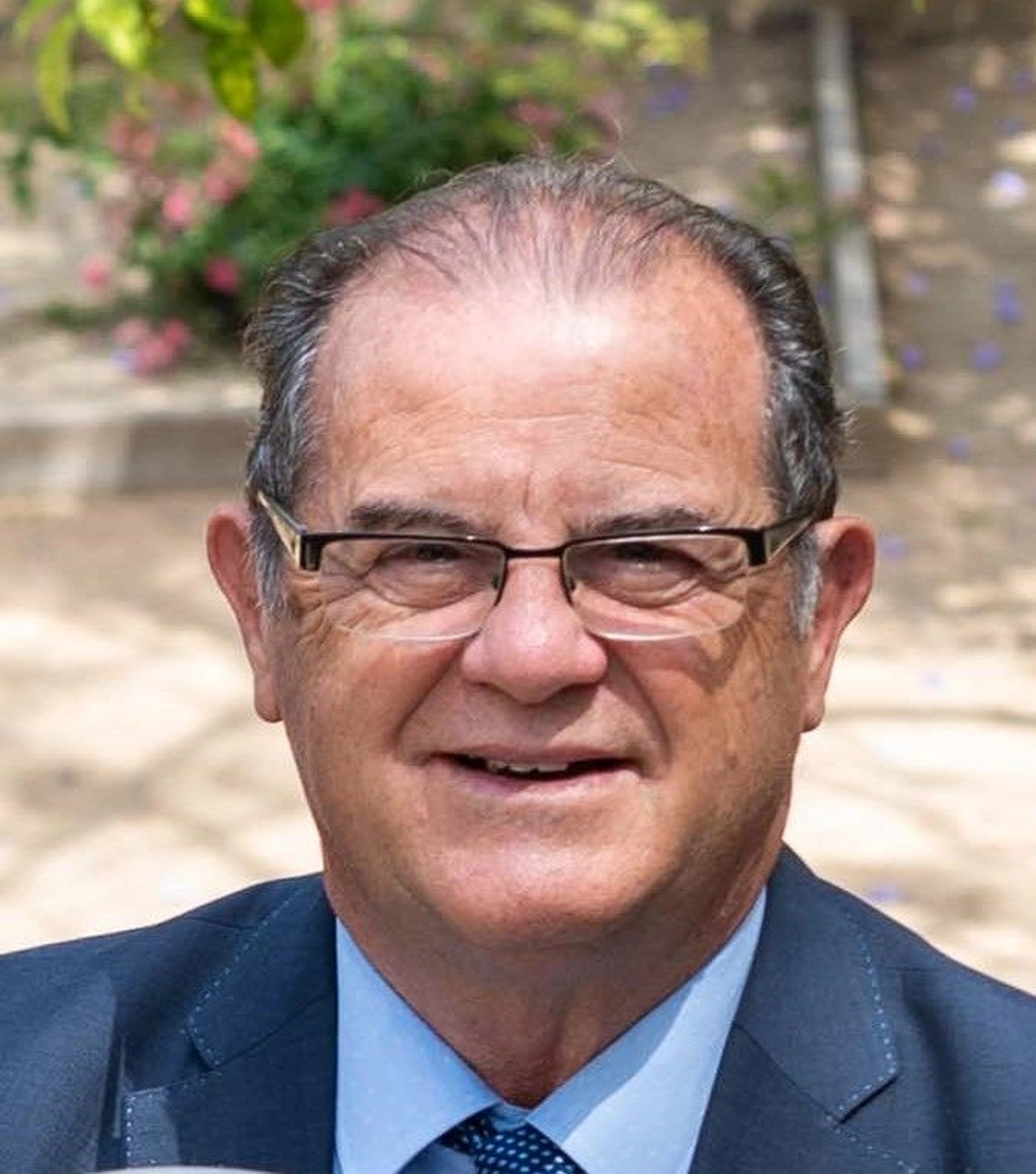
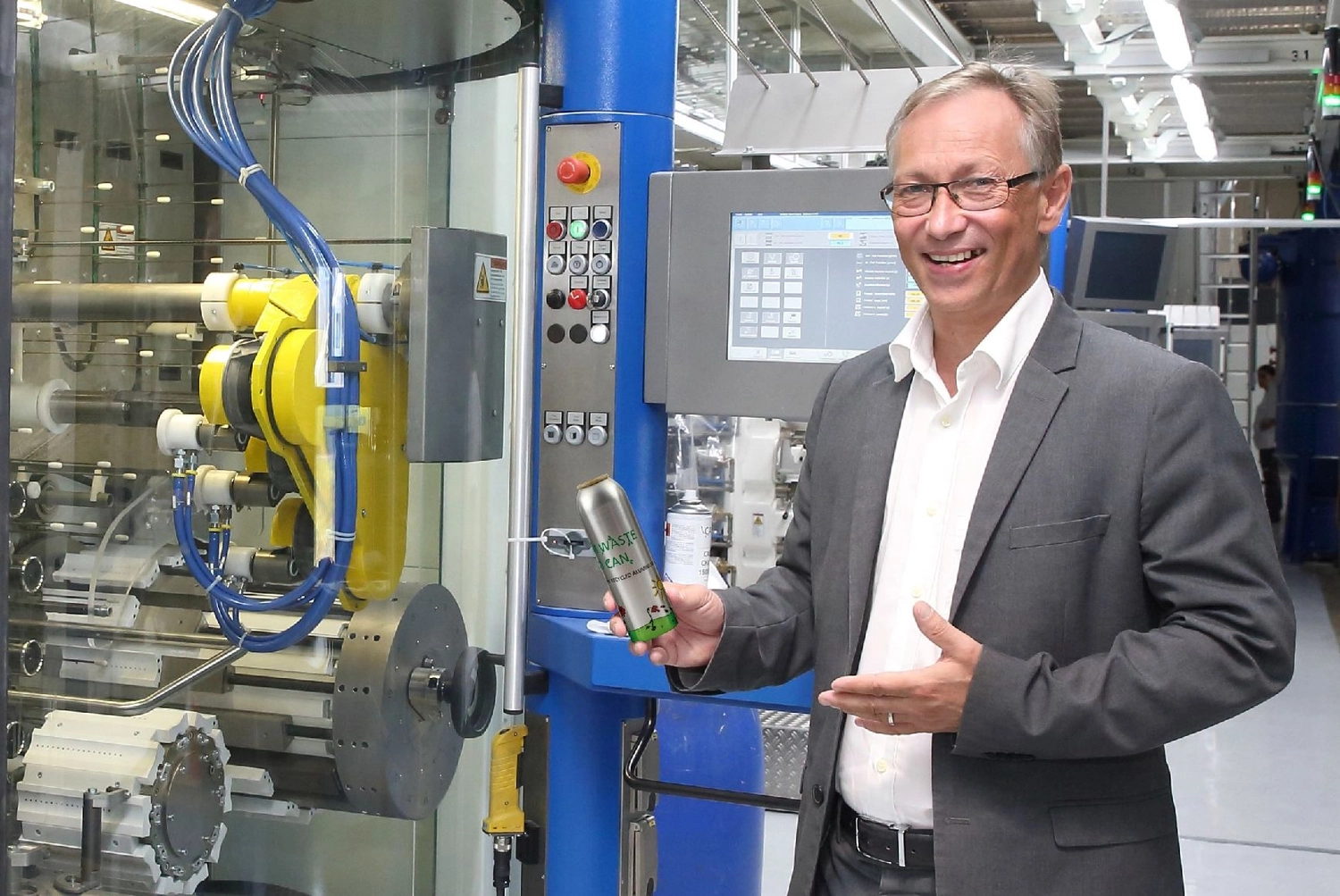
Aerosol cans made of 100% post-consumer recycled aluminum from Nussbaum have been available in stores since the beginning of December 2021. To manufacture this product line, the Swiss packaging specialist uses only recycled aluminum, which is extracted from beverage can waste. Aerosol Europe spoke to Florian Nussbaum, CEO and owner of the Nussbaum Group.
AEROSOL EUROPE: Mr. Nussbaum, the first aerosol cans made exclusively from recycled beverage cans have been on the market for several months. How satisfied are you with current developments?
Florian Nussbaum: With this innovation, we are entering new dimensions of sustainability, and this fills me with great pride. The Nussbaum Group is the world's first producer of aluminum monobloc cans that is able to manufacture cans without primary aluminum – industrially and in large quantities.
There are a number of products on the market that use PCR material, but none of these products are 100% PCR and none are officially certified according to ISO 14021. Making the use of 100% PCR aluminum industrially reliable and without any loss of quality and overcoming existing paradigms were incentives for us and challenged our technicians’ ambition.
Thanks to sound technical expertise and the unbridled will of everyone involved, we finally succeeded in making a breakthrough. However, it was also crucial that Beiersdorf, as our development partner, quickly recognized the potential for this innovation and that we were able to convert entire product lines to the new standard. In the meantime, more than 30 million pieces are already on shelves across Europe. This reduces CO2 emissions by a powerful 96% due to 100% Nucan-PCR products. Not only does this look good on the shelf, but it is also increasingly a key selling point for consumers who want to actively reduce plastic and energy waste.
The aluminum packaging is already sustainable per se, as 75% of the recycled aluminum is still preserved in the value added and is infinitely recyclable. Therefore it is important that this valuable material not be lost and that we strive for recycling rates that are as high as possible. For this way, we can preserve the original high energy expenditure for the extraction of aluminum for the benefit of society. Thanks to low energy consumption (4%), the energy expenditure can be amortized indefinitely.
The use of 100% Nucan-PCR material reduces CO2 emissions in the production of the cans by 96%, which undoubtedly makes aluminum packaging much more attractive and competitive. We started with series production in the fourth quarter of 2021, and we have used around 1,000 tons of PCR aluminum to date. This spared production of more than 6,200 tons of CO2. For this, you could drive around the world around 455 times in a medium-sized car. This is a decisive step forward in our sustainability strategy for zero-emission production.
AEROSOL EUROPE: The term "PCR" is currently on everyone's lips. What does "post-consumer recycled" mean for Nussbaum?
Florian Nussbaum: Our Nucan-PCR aluminum consists of 100% beverage can waste, which has been recycled by consumers via the collection of recyclable materials. We do not use primary aluminum, nor do we use industrial waste such as production sections, lithoplates or cable wires – unlike other market participants. Since the beverage cans are collected and processed in a variety-specific and local manner, complex sorting processes and long transport routes are no longer necessary – a further advantage for Nucan-PCR aluminum. Thanks to tool and process innovations, we can process the high alloying content in the PCR material and at the same time reduce the material we use. We are the only aluminum can producer that offers such a can-to-can upcycling. We are proud that we have recently been awarded DIN EN ISO 14021:2016 certification according to environmental marking type II for our two German production sites. An independent accredited testing institution has carefully examined the value chain and the procedure and confirms transparency and traceability by issuing the certificate. This is important because it is not easy for our customers to compare different definitions and recycled content from different vendors. DIN EN ISO 14021 provides clarity in this regard.
AEROSOL EUROPE: In which areas do you see the greatest growth opportunities for recycled aluminum cans?
Florian Nussbaum: All companies that have recognized that true sustainability cannot be replaced by greenwashing and that rely on Swiss quality and reliability will not be able to avoid 100% Nucan-PCR. At the moment demand is very high, but skepticism or the higher price still prevents some customers from placing their trust in sustainability. I am pleased, however, that many European brand owners have already successfully tested products in order to be able to put them on shelves and in customers’ hands quickly. We have received a particularly high number of inquiries from our core segment, the personal care sector. The pharmaceuticals sector is more cautious, partly because its procedures take more time.
In general, we note a high affinity for sustainable products – including their packaging – among consumers around the world. As a result, demand from other sectors, be it food packaging or technical articles and household aerosols, is increasing steadily. The sustainable use of resources is currently a major concern for our society, and we believe that this is not a fad, but rather a trend that will continue. Therefore, in addition to the 100% Nucan-PCR cans, we also offer refill products. Continuous and reliable supply is increasingly important to our customers in these uncertain times.
AEROSOL EUROPE: You mentioned the issue of refilling. In addition to classic aerosol cans, Nussbaum also produces other aluminum packaging.
Florian Nussbaum: In fact, our refillable and reusable cans, such as spice shakers, can boxes, powder cans, and our screw cans, are currently attracting a great deal of interest. The latter are celebrating a real revival. The screw cans have been part of our product portfolio for exactly 30 years and are more popular now than ever. Companies have discovered the potential of refillable packaging, particularly in the area of personal care. Today, consumers are increasingly turning to products that can be refilled easily and automatically after use. We feel this trend and see that it has opened up the market for products that were not found in aluminum a few years ago – shampoo or detergent, for example.
We also have great expectations for our latest development, the aluminum roll-on deodorant. Traditionally, deo rollers have been made of glass or plastic. Our alternative made of aluminum is about 75% lighter and holds 50% more product with the same format. And if you accidentally drop the deodorant in the bathroom, there will be no damage to the sink or tiles. That's a big advantage as compared to the glass version. After use, the deo can be disassembled into its individual parts and the individual components can be recycled.
Our non-aerosols can also be made of 100% Nucan-PCR aluminum on request.
AEROSOL EUROPE: What environmental issues is Nussbaum currently dealing with – apart from aluminum recycling?
Florian Nussbaum: Climate protection and the resulting adjustments to our processes are of great importance to the Nussbaum Group. Starting in 2030, we want to produce climate-neutral packaging solutions. In order to achieve this ambitious goal, we are constantly making adjustments in the areas of energy management and mobility, as well as process optimization. We rely on continuous monitoring as well as on a responsible purchasing and investment policy. Here, regionality is also important to us. We use materials and technologies that are as environmentally friendly as possible. For example, we have been using mineral oil-free printing inks for about 4 years; these consist of more than 60% vegetable, renewable components. We are also working continuously with our suppliers on environmentally friendly options with regard to the coatings used. On request, we use BPA N.I. varnish and paint systems, and we offer formaldehyde-free and water-based paints. Our production plants in Germany are certified according to ISO 50001 in the field of energy management, while our Swiss headquarters is affiliated with a voluntary program for climate protection and energy efficiency.
AEROSOL EUROPE: What do you think the future holds for the development of demand for aluminum packaging?
Florian Nussbaum: The material aluminum is becoming more and more established as an environmentally friendly raw material, and it is winning people over thanks to its low weight, stability, and excellent product protection. We are therefore convinced that the use of aluminum packaging will increase; on the one hand to reduce plastic waste, and on the other because of the product properties.
Currently, the explosion in energy and raw material prices is roiling the market and the price of aluminum is no exception. However, the price increase here is much lower than for tinplate. We are optimistic that this storm will also pass. Our company looks back on a nearly 60-year history, so it's not easy to fluster us. Our passion is and will continue to be the development and manufacturing of aluminum packaging solutions and our dedicated team is working on this every day.
AEROSOL EUROPE: Mr. D’haese, dear Alain, the FEA Global Aerosol Events will take place on 23 & 24 September 2020 in Lisbon. Are preparations already underway?
Alain D’haese: We started working on FEAaerosol2020 already in 2018 and preparations go crescendo. Booking for the exhibition increases regularly. The FEA Congress becomes Aerosol Today and its programme is well-advanced but still under development. The FEA Awards categories have been revisited, the entry form is already available, and an independent Judging Panel will be soon revealed.
Registration to the exhibition and the conference is also already open, we invite readers to have a look at our website www.feaglobalevents.org
AEROSOL EUROPE: Can you tell our readers how many exhibitors and visitors you are expecting in Lisbon?
Alain D’haese: around 1,500 key industry decision-makers and 100 exhibitors representing the full supply chain of aerosol packaging are expected at FEAerosol2020 in Lisbon. Free entrance is offered to exhibitors, their colleagues and their guests.
AEROSOL EUROPE: This year there were a lot of aerosol exhibitions and congresses worldwide. Next year there will be significantly fewer exhibitions and congresses. Does that “help”?
Alain D’haese: We are not thinking that way. Whatsoever the other events, FEA is solely dedicated to the aerosol industry and wishes to provide essential insights into the key issues affecting the aerosol industry, as well as outstanding networking opportunities for brand owners, fillers and suppliers to discuss the latest trends and wider business environment.
AEROSOL EUROPE: Can you tell us a little bit about the lecture program?
Alain D’haese: As already mentioned, the FEA Congress becomes Aerosol Today and will focus on key issues such as recycling or e-commerce, but also original topics provided from relevant speakers. More information will be available on www.feaglobalevents.org in the weeks to come.
AEROSOL EUROPE: In rough terms: In what way will BREXIT have an impact on the European aerosol market? And perhaps on the congress next year in Lisbon?
Alain D’haese: Following the recent general elections in the UK, Brexit will happen. There are still many uncertainties and bad surprises will certainly pop-up, despite the transition period. FEAerosol2020 being a global event, I do not think there will be an impact, but discussions on Brexit will certainly animate the corridors.
AEROSOL EUROPE: How is the current situation regarding the aerosol production in Europe?
Alain D’haese: European aerosol production is growing at low pace and we can witness certain shifts of production among European countries.
AEROSOL EUROPE: How high do you estimate the growth potential in the European aerosol market in the medium term?
Alain D’haese: The European aerosol market is a mature market. If the industry wants to significantly increase its growth, new product categories and new aerosol positioning will need to appear on the market.
AEROSOL EUROPE: Which topics urgently need to be addressed within the European aerosol industry?
Alain D’haese: With the recently published European Green Deal of the new European Commission, circular economy is a key priority. In March 2020, the Commission will adopt a new circular economy action plan including a ‘sustainable products’ policy which will intend to support the circular design of all products based on common principles. It will prioritise reducing and reusing materials before recycling them. It will foster new business models and set minimum requirements to prevent environmentally harmful products from being placed on the EU market. Extended producer responsibility will also be strengthened. Packaging recyclability and effective recycling will be key elements for the future.
AEROSOL EUROPE: Where do you see the aerosol product in the near future?
Alain D’haese: I feel the aerosol industry will continue matching consumer’s needs and expectations, in anticipating for example the consumers ‘greener and healthier’ trend.
AEROSOL EUROPE: What goals have you set for yourself in the near future?
Alain D’haese: My short- and long-term goals are the same: be happy.
AEROSOL EUROPE: Mr. D’haese, dear Alain, thank you for this conversation.
AEROSOL EUROPE: Mr. Baudin, first of all, congratulations to you on your election as the new president of the European Aerosol Federation, FEA! We wish you a lot of success in your new position! What will be the focus during your term as FEA president?
Gilles Baudin: First of all, I would like to thank Rolf Bayersdörfer, my predecessor, for his outstanding contribution during the last nine years.
My focus will be to ensure that the voice of the aerosol industry continues to be heard in Europe and beyond.
As FEA, our values remain to work towards achieving sustainable economic growth by focusing on social and environmental responsibilities. This dedication is enabled by the high level of expertise of its wide range of members, representing the whole value chain of the aerosol industry.
The FEA Global Aerosol Events also play a pivotal role for global and local actors to exchange on these industry values.
AEROSOL EUROPE: What is the present situation of the European aerosol industry? Can you also please give us some production figures?
Gilles Baudin: The aerosol industry is growing steadily. The latest FEA Statistics Report shows that European aerosol product manufacturing reached a new record high with more than 5.7 billion units, more than half of which are personal care products. United Kingdom, Germany and France continue to be the main filling countries.
The aerosol industry is in good shape to continue meeting consumers’ expectations and coping with sustainability challenges through innovation.
AEROSOL EUROPE: From your point of view: What topics will be especially important for our industry in the near future?
Gilles Baudin: There are some hot topics like the next adaptation of the Aerosol Dispensers Directive related to plastic aerosols, the circular economy including recycling, several classification and labelling issues. The uncertainties related to Brexit are of high concern, but not specific to the aerosol industry.
AEROSOL EUROPE: Are there any issues that need to be discussed urgently in the European aerosol industry?
Gilles Baudin: In my opinion, the most urgent actions are related to recycling, to close the loop of the circular economy.
Due to the new mandatory higher recycling rate for packaging waste, it is likely that the recycling of aerosols will be discussed or re-discussed in several countries. Most of the studies related to the safe recycling of aerosols date from the nineties. They remain valid, but authorities might question whether additional studies are needed.
AEROSOL EUROPE: What do you think about the European aerosol industry when you think of the discussions surrounding BREXIT?
Gilles Baudin: As I said, the uncertainties related to Brexit are of high concern but not specific to the aerosol industry. Businesses will have to adapt to the political decisions that will be made.
At the FEA level, our UK association BAMA will continue to contribute to the common efforts to maintain a strong and sustainable aerosol industry in Europe.
We are and will remain united.
AEROSOL EUROPE: Harmonization and standardization is always an issue. In brief what is the situation in Europe right now?
Gilles Baudin: Standardization is not a sexy topic but is crucial. The FEA standardization working group is very active. Both EN and FEA standards continue to evolve as needed by the aerosol industry. FEA also works with its sister associations worldwide to harmonize certain standards.
AEROSOL EUROPE: In a globalized world, the cooperation of national associations is enormously important. Can you give our readers a rough “update” on this?
Gilles Baudin: Cooperation is key at two levels: among the national associations in Europe, but also with the other associations worldwide. The main purposes are anticipation of adverse situations, coping with the concerns and turning threats into opportunities. Mutual understanding and speaking with one voice are then of utmost importance to achieve these goals.
AEROSOL EUROPE: In which segment of the aerosol production in Europe do you see growth potential in the near future?
Gilles Baudin: An aerosol dispenser is a modern, healthy and flexible packaging. There is growth potential in each segment! Brand owners need to continue meeting users’ expectations in both industrial, professional and consumer applications. And we have technologies that allow us to do this in a sustainable way.
AEROSOL EUROPE: Are there any trends in Europe regarding aerosols?
Gilles Baudin: The main trends regarding aerosols will follow the main trends of consumers.
At the recent FEA Global Aerosols Events in Düsseldorf, Euromonitor provided the top three megatrends shaping the aerosol industry: experience more, healthy living and ethical living, as well as key takeaways.
AEROSOL EUROPE: In general, how do you see the future of the aerosol product?
Gilles Baudin: Bright. As any industry, we have challenges, but the aerosol industry has already demonstrated its ability to innovate to convert its threats into opportunities. However, there is no time for complacency in this ever faster changing world.
AEROSOL EUROPE: Mr. Baudin, we thank you for this interview.
AEROSOL EUROPE: Mr. Caldeira, could you describe for our readers in which areas the CSPA has been able to achieve significant things for our industry in 2017?
Stephen J. Caldeira: Clearly, CSPA was not a trade association that was broken, but we also knew we had some opportunities that we could capitalize on moving forward to strengthen and enhance our visibility and credibility on behalf of our membership. So, a lot of the points that I made in my presentation at the Annual Meeting in terms of how we can achieve and execute some of those ideas were very important.
We knew we needed to collect economic data specific to our member companies and the verticals that we represent, so we did that, so we can better tell our story to policy makers at all levels of government. We also knew we needed to fully understand what our members thought, which is why we conducted an extensive membership survey. We also knew that our name didn't work and that we needed to do research with focus groups to get to the right place. As you can imagine, with 7 divisions you are never going to get one name that’s perfect. We really had to find a name solution that wasn't so vague, and at least gave our key stakeholders and constituencies some idea as to who we represented through the new name, tag line and, of course, a new logo that would bring a more modern feel to the association.
So, it was about collecting economic data. It was about how do we get a name that works better for us. It was about understanding what our members need and why. We needed to reset the table somewhat, with the staff, to make sure we had the right people with respect to skill sets and experience in certain areas - and I think we have done that, with the board’s full support.
It was also a year where as the new CEO, I needed to get out there and engage with, and listen to, the membership, starting with the Board of Directors - we have 29 Board of Director companies - and I have visited a vast majority of them. I think it was very important to set the tone, to be visible, and to be perceived as a good listener. We could then take what we have learned and bring this back to our staff, so that they could understand why we needed to reinforce the importance of those issues as they relate directly to our strategic plan.
We also had the biggest legislative threat to our industry in quite some time. The Cleaning Product Right to Know Act of 2017 was introduced in California and as originally drafted, the bill would have been very burdensome and extremely costly to our members. Fortunately, with the assistance of a very diverse stakeholder group of over 100 environmental and public health groups, including our Government Relations team and member companies, we were able to mitigate the ingredient communication bill to a place that our members may not have loved it, but ultimately, they could live with it. Both sides compromised after numerous, intense discussions, a clear sign of a successful negotiation. But everyone won something in California: a law that provides meaningful and understandable information to consumers and workers, while also protecting significant financial investments that companies have made in product innovation.
We will take that momentum and try to build on those relationships (including allied trade associations) to successfully leverage them for future legislative and regulatory issues, at all levels of government.
There are still issues at the federal level that we are dealing with, including with the Environmental Protection Agency (EPA), that are extremely important to us – for example, ensuring that the Toxic Substances Control Act, amended by Congress and signed by President Obama in 2016, as part of the Frank R. Lautenberg Chemical Safety for the 21st Century Act), continues to be implemented efficiently and effectively.
It has been a very positive and informative year, and it has surely been a year of change and disruption, and not just for our association or the industry that we represent. Clearly, there is a new political dynamic in Washington, and we are all trying to figure out how to best navigate these uncharted waters, and how this may impact our industry and the members we represent, moving forward. But I am excited about 2018 because while there will always be challenges, there will also be opportunities to make a positive impact for our members.
AEROSOL EUROPE: How did the name change come about?
Stephen J. Caldeira: The name change was derived from a conversation that I initiated during the executive search committee process to obtain this position. This issue was exacerbated for me when I was in and around Washington meeting with various organizations and business executives that I know, as well as getting out within the membership. So, it was a combination of the fact that initially I just felt the name didn’t work (since I am a communications person at the core), because it didn’t convey who we were, what we do, who we represent and what our issues might be. If you cannot get beyond the name, if you always have to explain the name, then that is a problem. So, we needed to push that to the side. The new name may not be perfect, but it’s at least much more in focus in terms of who we represent and what our public policy issues are. The board of directors deserves tremendous credit for being open-minded.
AEROSOL EUROPE: In a globalized world, the cooperation of national associations is enormously important. Can you give our readers a rough “update” on this?
Stephen J. Caldeira: We are going to continue to build on that excellent point. Increasingly, the world is smaller, and through advancing technologies and the globalization of businesses, the consolidation of businesses, etc., we must stay out in front of the global issues that could impact our members by working closer and in concert with pertinent international trade associations and regulatory bodies.
AEROSOL EUROPE: The big issue is always harmonization in Europe/America. Can you give us an update?
Stephen J. Caldeira: As an example, there are various aerosol-related groups and trade associations, etc. to whom we are talking with because some of our members are also members of these organizations, and therefore global harmonization of issues will always be critically-important, for myriad reasons.
AEROSOL EUROPE: In your presentation at the Annual Meeting, you have mentioned that CSPA, now Household & Commercial Products Association (HCPA), will engage in more digital communication.
Stephen J. Caldeira: Today, you are not sending out press releases as often anymore, given that you can now post something on Facebook or you can tweet or retweet something and it is out there immediately. When you represent member companies that engage in digital communications and social media, as many of us do personally, it just reflects the way the world is going. If you don’t stay ahead of the curve, then I think it is to your detriment as an association and certainly you are not serving your members well.
At HCPA, we will always strive to find the appropriate mix of traditional media and digital communications to be effective, and we are 100% committed to achieving and sustaining that goal.
AEROSOL EUROPE: What will be the main focus in the medium-term for you as the president of the association?
Stephen J. Caldeira: The primary focus must always be to passionately and strategically advocate on behalf of your members. To protect them against unnecessary regulatory overreach and or ill-advised legislative proposals. We must always be focused on promoting our industry as a significant force within the US economy. We must always employ a strong and vibrant communications program to provide the air cover in support of our advocacy efforts.
We also need to do a better job of marketing, not just for existing products and services, but for new and innovative products and services to strengthen the value-proposition for the membership. There are certainly times that we will need to be reactive, but the mindset now will be more proactive and aggressive. Clearly, we are not going to move away from our collaborative spirit with diverse stakeholders at HCPA. However, we must also proactively build and sustain effective relationships with other like-minded trade associations, and business-related coalitions to maximize our overall advocacy effectiveness.
AEROSOL EUROPE: Is it easier to work with the new US-government?
Stephen J. Caldeira: No matter who is president, or what party they may happen to represent, the fact of the matter is that we must figure out ways to work effectively with the President and his administration. President Trump, as we all know, has a very different and unique style, and an approach unlike most other presidents.
To best advocate on behalf of our members, we will continue to adapt to this new administration, and strategically navigate as best we can any potential changes to our industry’s legislative and regulatory environment.
AEROSOL EUROPE: A few words about your background…
Stephen J. Caldeira: Most recently, I represented the franchise industry for nearly five and a half years. And the specialty chemicals products industry, not unlike the franchise industry, would welcome a less burdensome and costly legislative and regulatory environment that further enables job creation and economic growth, as opposed to stifling it.
AEROSOL EUROPE: What do you think about the European aerosol industry when you think of the discussions surrounding BREXIT?
Stephen J. Caldeira: Britain is still trying to figure out with the EU what BREXIT will mean and how the exit strategy will play out over the long-term. We of course will continue to monitor that situation, but again, despite BREXIT, I don’t think this changes the fact that we must continue to work with both Britain and the EU, moving forward. We’ll have to adapt to whatever that unfolding situation may look like, but at the end of the day, our job is to clear the way for our companies to grow, both domestically, and internationally (where appropriate).
AEROSOL EUROPE: How many members do you have at the moment? And what do you do to attract new members?
Stephen J. Caldeira: We have approximately 220 members. You will see a ramped-up effort in 2018 with respect to membership recruitment and retention. We are going to try to re-visit with many of the companies that left (for whatever the reason/reasons) over the last few years and try to share with them the value-add and return on investment that we believe we are starting to consistently deliver. We are also going to continue to search for new members whom we believe can benefit from our enhanced products and services, and a very unique and proven advocacy focus.
AEROSOL EUROPE: Mr. Caldeira, we thank you for this conversation.
Stephen J. Caldeira: It has been a distinct pleasure and my deep gratitude to Aerosol Europe for this wonderful opportunity to communicate with your readers on the most pressing issues of the day.
AEROSOL EUROPE: Mr. Cathcart, after 17 years of successful work as president and CEO of the CSPA, you are retiring in January 2017. Very briefly, of which successes are you especially proud?
Christopher Cathcart: The association's reputation is very strong and that applies to all of our divisions, particularly to our aerosol products division. We are an association that does everything it can to reach out and make sure we find a constructive pathway forward. We engage all parties. We represent our members’ interests. This has become our brand as we collaborate and engage. Of all the things we have accomplished over the years, our reputation is what I’m most proud of. We are honest brokers and I think that serves the interest of the membership very well.
AEROSOL EUROPE: What advice would you give your successor?
Christopher Cathcart: The association is in very good shape, including financially. CSPA has clear direction thanks to our strategic plan. My advice to my successor is to get to know your staff. They are all wonderful people -- very dedicated and professional. Our membership is engaged and want the association to be successful. I think all signs are positive for the new President and CEO.
AEROSOL EUROPE: In your opening speech at the Annual Meeting, you mentioned briefly that you would be devoting yourself to new “tasks,” especially to your family. Will you still be available to advise the association?
Christopher Cathcart: Absolutely. It has been my joy to work with such a fine group of companies and corporate professionals and staff. I will be available to help them out if they need anything. If my successor needs to confer with me, I will be happy to do that.
AEROSOL EUROPE: From your point of view, what topics will be especially important for our industry in the near future?
Christopher Cathcart: I think there are several things that we will need to watch. With the change in the political leadership, I expect that we will see a shift more to the state and local level when it comes to dealing with chemical management, ingredient disclosure, and waste disposal. I also believe we will see more engagement with retailers. We have to be prepared for the possibility that there will be additional issues or potential constraints being proposed at the state or local level, which could affect how we get our products to consumers.
AEROSOL EUROPE: In your speech at the Annual Meeting, you also mentioned CARB. What is the current state of things here?
Christopher Cathcart: We have a good working relationship with CARB. The big challenge is meeting the VOC reduction requirements year after year and what impact that has on the efficacy of the products that we are trying to get to consumers. I think that is an ongoing concern for all of us in the industry.
AEROSOL EUROPE: With the death of Doug Fratz, we have lost an internationally recognized aerosol expert. Is there any way we can make up for such a loss in the short term?
Christopher Cathcart: We have a good team on staff but nobody thinks that they could fully replace what Doug learned over a whole lifetime of professional work. The next President and CEO will be working to hire another senior scientist to join the CSPA team. In the meantime, with Kristin Power, the Staff Executive for the aerosol division, who understands advocacy relating to aerosol issues and with the support of our in-house scientist, Dr. Steven Bennett, we are in good shape. It is not the same as if Doug were here, but we want to carry on Doug's legacy.
AEROSOL EUROPE: Can you provide us with current production figures for aerosols for the American market?
Christopher Cathcart: I’m pleased to say that the U.S. aerosol products industry remains strong and is growing. According to CSPA‘s Aerosol Pressurized Products Survey, the U.S. aerosol sector lodged historic highs in production, with the total number of units filled in the U.S. hitting 3.820 billion units in 2015. This represents a 0.6 percent increase from 2014. CSPA’s comprehensive snapshot of the U.S. aerosol industry is a powerful tool that businesses have used for more than a half century to inform planning, investment, sales, and research and development decisions.
AEROSOL EUROPE: What will be the challenges for our industry in the medium term?
Christopher Cathcart: With the political change in the U.S., we have to understand what it will mean with respect to how our products will be regulated at the federal level versus state and local levels. If there is a perception that there is going to be a relaxation of federal regulation, will the states then step up? Whether this actually happens, almost doesn’t matter. If states perceive there is weakening of regulation, they may step up and there could be even greater activity.
AEROSOL EUROPE: Mr. Cathcart, we thank you for this conversation.

AEROSOL EUROPE: Please introduce yourself to our readers and tell us about your company?
Paweł Pietroń: With pleasure! My name is Paweł Pietroń. My adventure with the aerosol industry began in 1987 when I started the first private company dealing in aerosol filling in Poland. It was a coincidence, because previously I worked in a state-owned chemical plant (then one of the largest in Poland) where I dealt with the production of aerosols on a large scale. There was a large automatic aerosol filling line manufactured by Pamasol, and I was involved in its maintenance and servicing. I have always been passionate about mechanics and high precision, and the mentioned aerosol production line with a capacity of 300 containers per minute fascinated me at that time.
This is how it all began. However, for starters, I would like to point out that we are not an authorized service and we do not have any agreement in this respect with Pamasol.
In those years, I started aerosol filling as a service based on the used equipment- then still using CO2 as a propellant. For several years, my company Aerosol Poland provided aerosol filling services, but, as a mechanic, I was always more interested in machine design, filling technology, etc. So at some point I decided to sell the filling company and to start making machines. A factor to consider was also that in those years the aerosol filling industry began developing strongly in Poland and I decided to use this momentum and my background of machine design and construction.
It was in this way that in 1993 I started the business of aerosol filling machine manufacturing, largely based on my experience from the operation of my own production line. As this is an extremely difficult and demanding industry that would not tolerate any errors, and today, after almost 30 years, it fascinates me as much as in the past when it was almost completely unknown in Poland. And because I always choose the toughest challenges, I chose to stay in the aerosol industry - and today I am so proud of that decision! With time, as per customer inquiries, devices for dispensing liquid and semi-liquid substances for the chemical, cosmetics and pharmaceutical industries were added to the portfolio.
The ZIGLER POLAND brand I created is known all over the world and the machines are operated reliably in 41 countries. In recent years, there has been a particularly strong growth in the cosmetics, medical and pharmaceutical sectors. This year, we launched, among others, highly specialized pharmaceutical production lines compliant with GMP [good manufacturing practice] standards for our clients in Europe. Every year we are present at many international fairs where you can see our equipment. Every year we meet our customers at international fairs, this year we even managed to do it online over the Internet.
AEROSOL EUROPE: In recent years, ZIGLER has focused notably on technologies supporting the pharmaceutical industry, you mentioned this to us in previous interviews. Please tell us more about it.
Paweł Pietroń: Yes, right, we have decided, with regard to high standard of our machines, skilful implementation of the best practices in terms of design, quality assurance and applied technologies, which is possible thanks to a team of people with many years of experience in the production of equipment for the pharmaceutical industry, to develop production in this area. As the whole world is affected by the pandemic, equipment for medical and pharmaceutical products and dietary supplements is in high demand at the moment. So to cut the long story short, our team keeps developing new equipment for safe and high-quality products. An integral part of the production process is to fully control the production process, which is confirmed by appropriate documentation, starting from the Risk Assessment to qualification and acceptance documents and to the final installation acceptance protocol. All components and materials used by us carry appropriate certificates depending on whether they come in direct contact with the product.
AEROSOL EUROPE: How do you rate the BOV or Bag-on-Valve technology and is it applicable to the pharmaceutical industry?
Paweł Pietroń: This is one of our best-sellers of recent years! When back in 2015 we hived off the company laboratory ZIGLER-LAB of the parent company, it turned out that BOV technology attracted greatest interest in the products being developed. In recent years, we have performed the most trials and tests for products based on this technology. It has many advantages as it is greener than conventionally used propellant gases. Nitrogen or air is used instead of a gas propellant so that the product is contained in a tightly sealed bag preventing contact with light and other external factors. The BOV technology finds a phenomenal application for products with various active ingredients where we want to keep the product clean throughout the entire life in use, and it protects against air, and thus oxygen penetration. It allows the product to be dispensed in any position, also by holding the packaging in an upside down position (with the spray head facing down), which is very important in some applications, e.g. in the case of preparations such as nasal spray, throat spray or skin application.
This system allows even companies that struggle with the problem of a lack of production space to develop their products in a laboratory on a small area with all the necessary equipment in one place and, most importantly, made in a way that ensures work safety and high quality products.
AEROSOL EUROPE: Record filling figures for the aerosol industry were reported last year. Do you think this trend will continue and what challenges may the industry face in the next few years?
Paweł Pietroń: Personally, I believe that this trend will continue and even gain in importance. Currently, we can see a continuous increase in sales of new products that appear on the market in the form of aerosol products. We at ZIGLER also observe it from the inside since our regular and new customers report to us with new ideas and inquiries for help in the development of the formulations and the selection of the appropriate machine fleet. So, yes, I am convinced that the industry is to experience further dynamic growth.
As for the challenges, they are due to grow bigger and bigger. From the point of view of ZIGLER as a manufacturer of aerosol filling machines and other dosing devices, we can see a continuous increase in technological and quality requirements. More and more pharmaceutical companies, which are our customers, match their products with the growing legal requirements by regulators and market requirements, which translates into higher requirements for machine suppliers. Of course, this involves the need to expand our design, documentation and validation capabilities, etc.
On the other hand, I consider this to be the right direction, when you want to defend yourself against products of inferior quality or ones manufactured in an uncontrollable manner which, unfortunately, also appear in the machinery industry coming from non-European markets.
Coming back to my passion which I mentioned at the beginning, I personally enjoy such challenges because they help to constantly improve the quality of ZIGLER products and services. I still personally supervise each stage, from design to production and assembly, and each ZIGLER device iss delivered to the customer and tested in accordance with the adopted procedures. I consider the quality assurance system as the key development in building the ZIGLER brand all over the world!
AEROSOL EUROPE: How does ZIGLER apply sustainable practices to its processes and manufacturing?
Sustainable development is of increasing importance in all industries.
Paweł Pietroń: The development of our equipment goes hand in hand with the needs and challenges that arise in our business environment. Our natural environment is priceless and therefore, when designing our devices, we remember to reduce energy consumption, the machines have a very long service life, they are in service for years, so that they do not become scrap themselves, and the products made on them are not rubbish going to the landfill. Low-quality production lines produced by pseudo-professional companies lead to shocking amounts of production waste. Moreover, the BOV technology we promote does not generate any greenhouse gases. And that is why we can proudly say that we help reduce such double losses - both for our customers' wallets and, most importantly, for our Earth.
AEROSOL EUROPE: What other services do you offer for the aerosol industry?
Paweł Pietroń: Working over 30 years in the industry have taught me that we should be not just a machine supplier, but a partner for our customers. Many years of experience and cooperation with our customer base have allowed us to develop a whole range of additional services that we can offer apart from the machines themselves.
As I mentioned before, we have been cooperating for years with experienced specialists in the pharmaceutical industry, not only in the field of product technology but also in the broadly understood aerosol technology, specific requirements of the pharmaceutical and medical industries, both regarding the machines themselves, their design and production processes, and supervision over all stages of production. We are fully aware that pharmaceutical products rely not only on good machines, but also on the reliability of the entire process, so we can equip our lines with integrated supervision systems that enable cooperation with the company's SCADA systems.
I would also like to point out that we enjoy a good cooperation with companies that are market leaders in the field of aerosol raw materials and components (containers, valves, spray heads, gas, etc.) All this proves that we operate comprehensively.
Our latest lines can be adapted to the requirements of Industry 4.0 and Pharma 4.0 for the pharmaceuticals.
Furthermore, we also provide technological consulting services related to the optimization of aerosol production processes in companies that have been operating in the industry for years. It turns out that even companies with a long tradition of filling can be helped to improve, advise and optimize a lot.
We also support our customers in designing the environment and determining the working conditions for our production lines.
I am proud that the ZIGLER brand is now identifiable and recognizable in many countries around the world with such a wide range of industrial support.
AEROSOL EUROPE: Is ZIGLER currently working on innovations or new products that you can tell our readers about?
Paweł Pietroń: All the time! Probably every industry requires continuous development, innovation and the roll-out of new products.
I can't imagine otherwise.
At ZIGLER, we are also constantly working to ensure that our machines are better and better, cutting-edge, more effective, reliable and meeting increasingly rigorous legal requirements and, above all, to make handling them nice and simple.
We constantly cooperate and take actions, and design contemporary systems with the leaders of the component industry, which are used in our lines, e.g. with FESTO, SIEMENS etc.
Currently, we place the greatest emphasis on the pharmaceutical industry. We are constantly expanding our offer, we also devote a lot of efforts and resources to cooperation of our machines with other devices and overriding systems, which I have already mentioned. We offer state=of-the-art production facilities for products such as MDI, NASAL SPRAY, BOV, skin preparations, but we also provide filling devices for the pharmaceutical industry for screw-on (syrups, drops), snap-on, crimp-on, roll-roll packaging for systems offered by APTAR and others, they can work in Clean room class D and class C and A. All devices, at the user's request, can be equipped with RABS enclosures type C or O.
We generally design and build our lines for individual orders. Very often, customers come to us with a specific packaging, and then our project team goes to work and creates a design and then a production line to meet the customer expectations.
At the moment, we are implementing such a project with a Russian patron for a filling line which allows the packaging to be closed in a compact monoblock.
AEROSOL EUROPE: Taking under consideration current world’s situation - what is the future of the aerosol filling technology?
Paweł Pietroń: We are convinced that the industry will thrive because aerosol packaging is the perfect solution for an increasing number of products. Because everyone cares about environmental protection, technologies are being developed to eliminate the use of non-renewable raw materials as well as to eliminate the use of substances that are hazardous or non-recyclable and harmful to the environment. The ease of use and various applications of aerosols will allow us to grow this market.
You are cordially invited to visit us at our headquarters in the south of Poland, to meet us at one of the many trade fairs we are present at, or to contact us online with our specialists who are at your disposal and speak German, Russian, Italian and English. We are very happy to be present in this industry and for years we have been building a strong brand supporting the development of our customers and their successes.
We plan further development in the field of equipment and technology for pharmacy and eco-friendly technologies such as BOV.
There are many challenges ahead of us, so we look forward to everyone to cooperate with us.